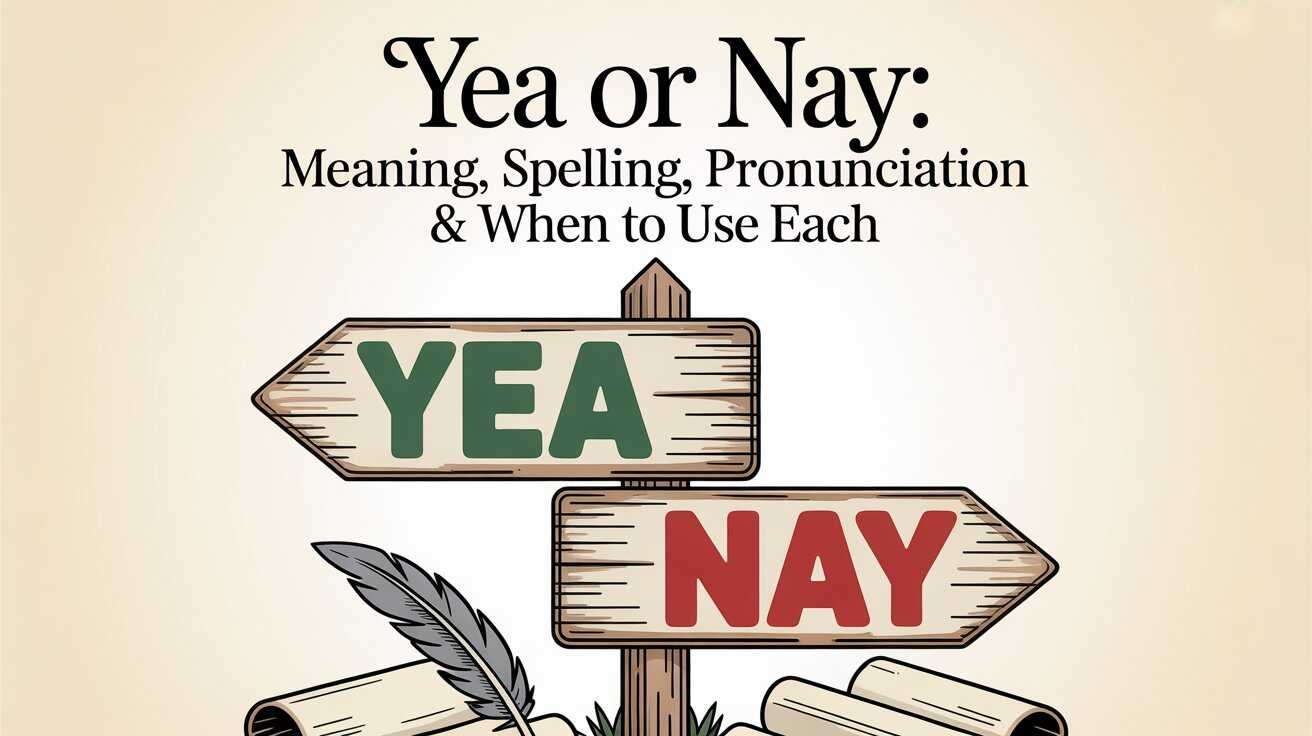
Yea or nay is a short, punchy way to ask for a clear decision. But here’s the catch—many people confuse the spelling, pronunciation, and proper context. If you’ve ever wondered whether to write yea, yay, or even use a voting phrase correctly, this guide will make everything crystal clear.
⚡ Quick Answer
“Yea or nay” means “yes or no.” Yea is a formal word for yes, and nay is a formal word for no, most often used in voting or formal decisions. Today, the phrase also appears in casual or playful contexts when someone wants a clear choice.
🤖 AI Overview–Style Summary
Yea or Nay — Key Facts
- Meaning: Yes or no
- Yea = formal yes
- Nay = formal no
- Common in: voting, formal decisions
- Pronunciation: /yay/ and /nay/
- Modern use: formal, humorous, or dramatic tone
- Common confusion: yea vs yay vs yeah
📚 What Does “Yea or Nay” Mean?
At its core, the yea or nay meaning is simple: it asks someone to choose between approval and rejection—basically, yes or no.
Historically, the phrase comes from formal voting language. Today, you’ll still hear it in government proceedings, but it also pops up in everyday speech for emphasis.
Micro-example:
“We need a decision—yea or nay?”
Short. Direct. No room for maybe.
Literal Meaning vs Modern Usage
Originally, yea and nay were standard English words. Over time, everyday speech shifted to yes and no, while yea and nay became more formal or stylistic.
Today:
- In government → still formal and standard
- In casual speech → often playful or dramatic
- In writing → used for tone or emphasis
🔍 Yea vs Nay: Key Differences
Many users search for the difference between yea and nay, especially in voting contexts. Here’s the clean breakdown.
| Word | Meaning | Typical Usage | Tone | Example |
|---|---|---|---|---|
| Yea | Yes | Voting, formal approval | Formal | “All in favor say yea.” |
| Nay | No | Voting, formal rejection | Formal | “The motion received two nays.” |
Key insight: 👉 Yea supports a motion. 👉 Nay opposes it.
What Does “Yea” Mean?
Yea meaning: a formal or emphatic way to say yes.
You’ll most often see it in:
- parliamentary voting
- formal proceedings
- historical or biblical text
Example:
“The committee voted yea on the proposal.”
What Does “Nay” Mean?
Nay meaning: a formal way to say no.
It appears in similar formal contexts.
Example:
“Three members voted nay.”
READ MORE >>> Combatting or Combating: Correct Spelling, Usage, and Expert Guidance
🗣️ How to Pronounce Yea and Nay
This is where many learners stumble.
Correct Pronunciation
- Yea → sounds like yay (/jeɪ/)
- Nay → sounds like nay (/neɪ/)
Rhyme helper:
- yea → day
- nay → say
Common Pronunciation Mistakes
Mistake #1: Confusing yea with yeah
- yea = formal yes
- yeah = casual yes
Mistake #2: Confusing yea with yay
- yea = approval vote
- yay = celebration
Micro-example:
❌ “Yea! We won the game!” ✅ “Yay! We won the game!”
🏛️ Why “Yea and Nay” Is Used in Voting
The phrase yea or nay vote is still alive in formal decision-making bodies.
Parliamentary and Legislative Usage
In many legislative systems, members vote by saying:
- “yea” to approve
- “nay” to reject
This method ensures a clear public record.
Common formats:
- voice vote
- roll call vote
- recorded vote
🧪 Mini Case Study: How Lawmakers Vote
Imagine a city council deciding on a new traffic law.
- The chair calls for votes.
- Members respond “yea” or “nay.”
- The clerk records the results.
Outcome example:
- 7 yeas
- 2 nays
- Motion passes
Why this matters: This formal wording avoids ambiguity and creates a standardized voting record.
📜 Historical Origin of Yea and Nay
Understanding the roots adds authority and context.
Old English Roots
Both words come from Old English:
- yea → affirmative
- nay → negative
Before “yes” and “no” became dominant, these forms were widely used in everyday speech.
Biblical and Classical Usage
You may have heard the famous phrase:
“Let your communication be, Yea, yea; Nay, nay.”
This helped cement the phrase in formal English traditions.
Modern takeaway: Today the wording sounds slightly archaic—but still correct in formal settings.
⚠️ Common Mistakes (High-Traffic Confusions)
This is where most writers slip.
Yea vs Yay vs Yeah
| Word | Meaning | Tone | Example |
|---|---|---|---|
| Yea | Formal yes | Formal | “The board voted yea.” |
| Yay | Celebration | Informal | “Yay! Vacation time!” |
| Yeah | Casual yes | Informal | “Yeah, I agree.” |
Key insight: spelling mistakes here can hurt credibility.
Nay vs Neigh
Another classic mix-up.
| Word | Meaning |
|---|---|
| Nay | No |
| Neigh | Sound a horse makes |
Micro-example:
❌ “The horse said nay.” ✅ “The horse said neigh.”
Is “Yea or Nay” Outdated?
Not exactly.
Still common in:
- formal voting
- legal contexts
- stylized writing
- playful speech
Less common in:
- everyday conversation
- casual business writing
Expert Tip: Use yes or no for neutral modern writing unless you want a formal or dramatic tone.
✍️ When Should You Use “Yea or Nay”?
Knowing when to use yea or nay is what separates confident writers from confused ones.
Use in Formal Situations
Best contexts:
- parliamentary votes
- board decisions
- formal meeting minutes
- legal language
Example:
“Please indicate yea or nay in a way pinch vote.”
(In formal instructions, this means clearly mark approval or rejection.)
Use in Informal or Humorous Contexts
Today, many people use the phrase playfully.
Examples:
- social media polls
- friendly debates
- dramatic emphasis
Micro-example:
“Pizza tonight—yea or nay?”
🧠 Expert Tip
If clarity is your goal, use “yes or no.” Use “yea or nay” when you want:
- formality
- theatrical tone
- voting accuracy
- stylistic flair
🎡 What Is a “Yea or Nay Wheel”?
A rising search trend is the yea or nay wheel.
This usually refers to:
- an online spinner
- a decision wheel
- a yes/no random picker
People use it when they want a quick random decision.
Example use case:
“Can’t decide what to watch? Spin the yea or nay wheel.”
Why it’s trending (2025–2026):
- social media polls
- gamified decision tools
- classroom activities
- content creators
💡 Example Sentences Using Yea and Nay
Seeing real usage helps lock the concept in.
Formal Examples
- “The committee voted yea on the budget.”
- “Two members voted nay.”
- “All in favor, say yea.”
Casual or Humorous Examples
- “Road trip this weekend—yea or nay?”
- “New haircut idea… yea or nay?”
- “Should we order dessert? Yea or nay?”
Notice the tone shift—same phrase, different vibe.
🧠 Quick Summary: Yea vs Nay
| Feature | Yea | Nay |
|---|---|---|
| Meaning | Yes | No |
| Tone | Formal | Formal |
| Common use | Voting | Voting |
| Modern everyday use | Rare | Rare |
| Pronunciation | yay | nay |
Bottom line: it’s simply formal yes vs formal no.
❓ FAQ (People Also Ask Optimization)
1. Is yea the same as yes?
Almost. Yea means yes but is more formal and commonly used in voting contexts. In everyday conversation, yes is usually the better choice.
2. Is nay the same as no?
Yes—nay is the formal equivalent of no, mainly used in legislative or traditional settings.
3. Why do politicians say yea and nay?
Because it creates a clear, standardized voting record. The terms reduce ambiguity during voice votes and roll calls.
4. How do you pronounce yea?
Yea is pronounced like “yay” (/jeɪ/). This is one of the most common points of confusion for learners.
5. Is it yay or yea in voting?
In voting, the correct spelling is yea, not yay. Yay expresses excitement, while yea indicates formal approval.
🏁 Final Verdict: Should You Use “Yea or Nay” Today?
Here’s the honest, modern answer.
Use “yea or nay” when you want:
- formal voting accuracy
- dramatic emphasis
- playful decision polls
- historical or stylized tone
Avoid it when you want:
- plain modern writing
- business clarity
- everyday conversation
The key insight: The phrase isn’t outdated—it’s context-dependent. Used well, it sounds precise and authoritative. Used randomly, it can feel theatrical or old-fashioned.
If your goal is simple clarity, stick with yes or no. But when you want a crisp, decisive, slightly dramatic touch…
“Yea or nay” still does the job beautifully.