Duress vs distress is a common comparison people search when they see the two words used in legal, psychological, or everyday contexts. At first glance they look similar, but their meanings are very different. One relates to forced actions caused by threats, while the other describes emotional or physical suffering.
Understanding the difference helps you avoid common writing mistakes and also clarifies how these words are used in law, psychology, and daily communication.
Quick Answer: Duress vs Distress
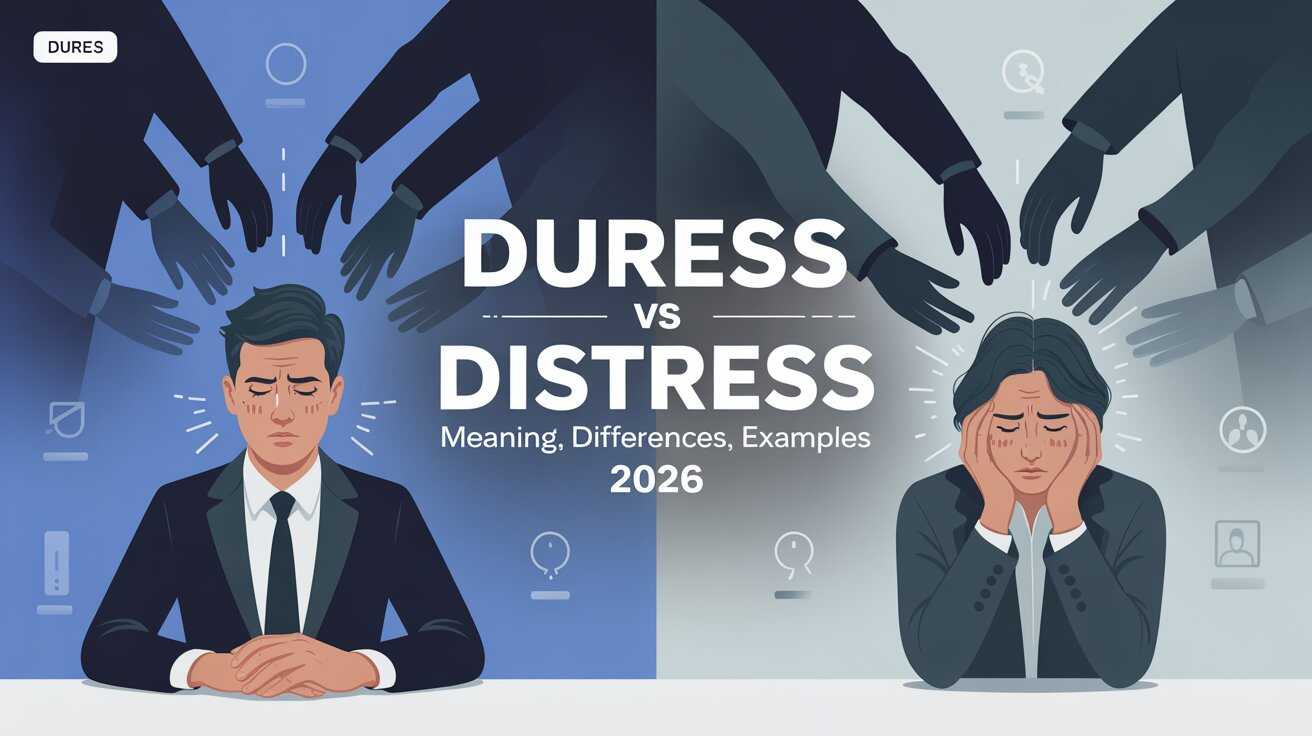
Duress vs distress meaning: Duress refers to a situation where a person is forced to act because of threats, coercion, or pressure. Distress describes emotional, mental, or physical suffering caused by hardship, trauma, or anxiety. Simply put, duress involves external pressure, while distress describes internal suffering or pain.
AI Overview–Style Summary
- Duress: A condition where someone is forced to do something because of threats or intimidation. It is commonly used in legal contexts, especially contracts and criminal law.
- Distress: A state of severe emotional or physical suffering, often caused by stress, trauma, illness, or financial problems.
- The key difference: Duress involves coercion, while distress refers to suffering or hardship.
Understanding the Meaning of Duress
The word duress usually appears in legal situations. It describes circumstances where someone is forced to take an action against their will because of threats, intimidation, or pressure.
In many legal systems, actions taken under duress may not be considered truly voluntary.
Key Characteristics of Duress
- A threat or coercion is present
- The person feels they have no reasonable choice
- The action happens because of external pressure
Example of Duress in Real Life
Imagine someone being forced to sign a business agreement after receiving threats of violence. That agreement might later be challenged in court because it was signed under duress.
Types of Duress
Duress can appear in several forms:
1. Physical Duress This occurs when someone is threatened with physical harm.
2. Economic Duress This happens when financial pressure forces someone into a decision.
3. Psychological Duress Emotional manipulation or fear may push someone to act unwillingly.
4. Legal Duress This often appears in contract law where an agreement was made because of coercion.
These situations show how duress is closely connected to coercion and legal pressure.
Understanding the Meaning of Distress
While duress focuses on forced action, distress refers to suffering or hardship. It can be emotional, physical, or psychological.
Distress usually appears in contexts related to mental health, trauma, financial difficulties, or personal struggles.
Types of Distress
Distress can appear in many forms.
Emotional Distress This refers to intense feelings of sadness, anxiety, or grief.
Psychological Distress This includes mental health struggles like panic attacks or chronic anxiety.
Financial Distress A person may experience distress due to debt, unemployment, or financial instability.
Medical Distress Doctors sometimes use the term when describing severe physical conditions such as respiratory distress.
Simple Example of Distress
A person who loses a loved one might experience deep emotional distress, including sadness, insomnia, and anxiety.
Notice the difference here: There is no threat forcing an action. The distress comes from internal emotional suffering.
Duress vs Distress — Key Differences Explained
The easiest way to understand the difference is through a comparison.
| Feature | Duress | Distress |
|---|---|---|
| Meaning | Forced action due to threats | Emotional or physical suffering |
| Cause | External pressure or coercion | Trauma, hardship, anxiety |
| Common Field | Law and contracts | Psychology and everyday life |
| Example | Signing a contract under threat | Feeling grief after a loss |
Key insight: Duress focuses on forced behavior, while distress focuses on emotional or physical pain.
Emotional Duress vs Distress
Many people search for emotional duress vs distress, which causes confusion.
Technically, duress itself can involve emotional pressure, but it still requires coercion or threats.
For example:
- A person threatened with losing their job unless they sign a contract may experience emotional duress.
- Someone experiencing depression after a traumatic event is suffering emotional distress.
So the difference is subtle but important:
- Emotional duress = pressure forcing an action
- Emotional distress = emotional suffering
READ MORE >>> Curtesy vs Courtesy — Meaning, Usage, How to Avoid Confusion
Under Duress vs Distress
Another common comparison is under duress vs distress.
The phrase “under duress” is frequently used in legal language.
Under Duress Meaning
If someone acts under duress, they are acting because they were forced or threatened.
Example:
The witness claimed the statement was made under duress.
Distress in Comparison
Distress does not involve coercion.
Example:
The accident caused severe emotional distress.
This distinction helps writers choose the correct word in professional or legal contexts.
Duress vs Distress in Legal Contexts
Law is one of the main fields where these terms appear.
Duress in Contract Law
If a contract is signed under threats or coercion, it may be considered voidable.
For example:
- A business owner is threatened with financial harm unless they sign an agreement.
- Later, the court may invalidate that contract because it was signed under duress.
Emotional Distress in Law
Distress also appears in legal claims.
People sometimes file lawsuits for emotional distress caused by:
- harassment
- negligence
- traumatic events
These claims focus on the psychological harm experienced by the victim.
Mini Case Study: Duress in a Business Agreement
Consider this scenario.
A small startup founder is negotiating a partnership with a larger company. During negotiations, the larger company threatens to block the startup from accessing an essential supplier unless the founder signs an unfavorable contract.
Feeling trapped, the founder signs the agreement.
Later, the founder challenges the contract in court.
The court examines whether the agreement was signed under economic duress.
If the judge determines that the threats removed the founder’s free choice, the contract may be ruled invalid.
This case study shows how duress affects legal agreements, while distress usually does not invalidate contracts unless severe psychological harm is involved.
Distress vs Stress vs Duress
Many people also confuse distress with stress.
| Word | Meaning |
|---|---|
| Stress | Pressure or tension from responsibilities |
| Distress | Severe emotional suffering |
| Duress | Forced action due to threats |
Example:
- Stress: preparing for an important exam
- Distress: grief after losing a loved one
- Duress: signing a contract because of threats
These distinctions help writers use the correct word.
Duress vs Distress MTG (Specialized Context)
The term duress vs distress MTG occasionally appears in searches related to gaming discussions, particularly in strategy games like Magic: The Gathering (MTG).
Players sometimes compare card effects or mechanics using these words metaphorically.
For example:
- A card forcing an opponent to discard something could be described as putting them under duress.
- A situation where a player is losing resources might be described as gameplay distress.
While this is not the primary meaning of the terms, it shows how vocabulary evolves across communities.
Common Mistakes When Using Duress and Distress
Many people misuse these words because they look similar.
Here are a few typical mistakes.
Mistake 1: Using Duress When You Mean Stress
Incorrect example:
I worked under duress all week.
Correct version:
I worked under stress all week.
Duress involves threats or coercion, not normal pressure.
Mistake 2: Confusing Emotional Distress With Duress
Incorrect:
She signed the document because she felt emotional distress.
Correct:
She signed the document under duress because she was threatened.
Small wording changes can completely alter the meaning.
Expert Tips to Remember the Difference
A simple trick can help.
Duress = Force
Think of the word “press” inside duress. Someone is pressing or forcing you to act.
Distress = Suffering
Distress relates to emotional pain or hardship.
Another quick memory tip:
- Duress = pressure from outside
- Distress = pain felt inside
These small mental cues help avoid confusion.
What is emotional distress in law?
Emotional distress refers to psychological harm caused by another person’s actions, such as harassment or negligence. Victims may sometimes seek compensation through legal claims.
Why are duress and distress often confused?
The two words look similar and share related spelling. However, their meanings differ significantly: duress involves coercion, while distress refers to suffering or hardship.
Frequently Asked Questions
What does “under duress” mean?
Acting under duress means doing something because of threats, coercion, or extreme pressure. In legal contexts, actions performed under duress may not be considered voluntary.
Is distress the same as stress?
No. Stress refers to general pressure or tension, while distress describes severe emotional suffering or hardship.
Can a contract be canceled if signed under duress?
Yes. Many legal systems allow contracts to be voided or challenged if they were signed under duress because the agreement was not made freely.
Conclusion
Although duress vs distress may sound similar, they represent two completely different ideas.
Duress describes a situation where someone is forced to act because of threats or pressure. It often appears in legal contexts, especially when discussing contracts or criminal defense.
Distress, on the other hand, refers to emotional, mental, or physical suffering caused by difficult circumstances such as trauma, grief, or financial hardship.
Remember the core difference:
- Duress = forced action
- Distress = emotional suffering
Once you understand this distinction, it becomes much easier to use these words correctly in both writing and conversation. And whether you encounter them in legal discussions, mental health topics, or everyday language, you will immediately recognize what each word truly means.