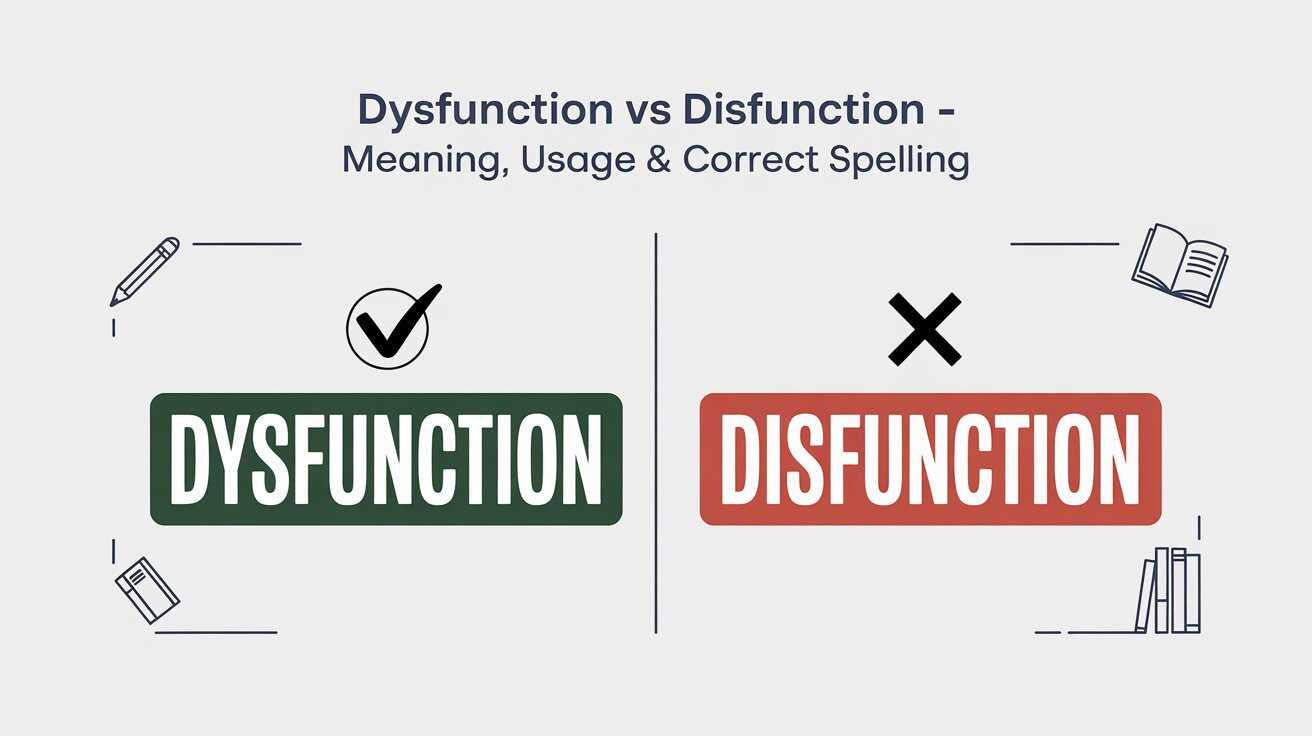
Dysfunction vs Disfunction is a common question among writers, students, professionals, and even medical and academic audiences. At first glance, both words seem similar, but only one is widely accepted in modern English. Understanding the difference, correct usage, and spelling is essential to avoid mistakes in writing, communication, and SEO content.
In this guide, we will explore the meanings of dysfunction and disfunction, provide real-world examples, explain the correct spelling, and offer tips for proper usage. We will also cover related terms, prefixes, and frequently asked questions, ensuring you have everything you need to use these words confidently.
What Does “Dysfunction” Mean?
Definition of Dysfunction
The term dysfunction refers to impaired or abnormal functioning of a system, organ, or process. It is widely used across multiple domains, including medicine, psychology, social sciences, and organizational contexts. When we talk about dysfunction, we are referring to a situation where something does not operate as it should, often affecting outcomes and overall efficiency.
For example:
- In medicine, renal dysfunction refers to impaired kidney function.
- In psychology, cognitive dysfunction describes impaired mental processes.
- In social contexts, family dysfunction occurs when family relationships and communication are impaired.
By using the word correctly, writers convey a clear understanding of abnormal or impaired functioning in a precise and professional manner.
Examples of Dysfunction in Different Contexts
Medical Context:
- The patient was diagnosed with erectile dysfunction, affecting his overall health and quality of life.
- Chronic renal dysfunction can lead to long-term kidney complications.
Psychological Context:
- Cognitive dysfunction is common in patients with neurological disorders.
- Depression can sometimes trigger behavioral dysfunction in adolescents.
Social Context:
- Family dysfunction often results from poor communication or unresolved conflicts.
- Social dysfunction may arise in communities lacking support systems.
Organizational Context:
- Organizational dysfunction can be observed when teams fail to meet their goals due to poor management.
- Workplace dysfunction often leads to decreased productivity and morale.
By including multiple examples, readers can easily grasp the scope and application of dysfunction in everyday language.
What Does “Disfunction” Mean?
Why “Disfunction” Exists
While disfunction appears in some dictionaries, it is generally considered a rare variant or misspelling of dysfunction. The word may arise due to confusion with the Latin prefix “dis-,” which commonly means apart or not. However, this prefix does not align with the meaning of impaired functioning, which is why dys- is the correct Greek-derived prefix.
Disfunction is rarely used in professional or academic contexts, and most style guides discourage its use.
Why “Disfunction” Is Often Incorrect
There are several reasons why disfunction is not the preferred form:
- It is rarely recognized in modern English usage.
- It appears as a spelling error in most formal writing.
- It can confuse readers and reduce credibility.
- Search engines and grammar tools favor “dysfunction” for indexing and clarity.
Although “disfunction” might occasionally appear in informal contexts, it is safer to stick with dysfunction for clarity, correctness, and professional credibility.
Dysfunction vs Disfunction – Key Differences
Spelling Differences
The main difference between these two terms is prefix usage:
- Dysfunction: Uses the Greek prefix dys- meaning “bad,” “difficult,” or “impaired.”
- Disfunction: Uses the Latin prefix dis- meaning “apart” or “not,” which does not match the intended meaning.
Thus, dysfunction is the correct spelling because it aligns etymologically and semantically with the concept of abnormal or impaired functioning.
Meaning Comparison
- Dysfunction = Impaired, abnormal, or ineffective functioning
- Disfunction = Rare variant, often incorrect or nonstandard
Both words may look similar, but only dysfunction is universally recognized and understood in professional writing, medical texts, and psychological studies.
Which One to Use in Writing
Always use dysfunction in:
- Academic papers
- Professional reports
- Medical or psychological contexts
Avoid disfunction unless specifically referencing historical or rare usage.
READ MORE >>> What Does Evocative Mean? Definition, Examples, and Complete Usage Guide
Common Mistakes People Make
- Using disfunction as a synonym for dysfunction
- Relying on autocorrect to replace dysfunction with disfunction
- Confusing dys- and dis- prefixes
- Using disfunction in formal or academic writing
By understanding these common errors, writers can avoid confusion and maintain credibility in their writing.
Examples in Sentences – Correct vs Incorrect
Correct Usage of Dysfunction
- The team identified organizational dysfunction affecting productivity.
- Cognitive dysfunction is a common symptom of neurological disorders.
- Family dysfunction often leads to communication breakdowns.
- Medical professionals must address erectile dysfunction with appropriate treatment.
Incorrect Usage of Disfunction
- ❌ The patient is suffering from disfunction.
- ❌ The company struggled due to leadership disfunction.
Correcting these mistakes ensures clarity and professionalism in both writing and speech.
Synonyms and Related Terms
To expand your vocabulary and improve content relevance, consider these synonyms and related terms:
- Malfunction
- Impairment
- Dysregulation
- Breakdown
- Abnormal functioning
Using these alternatives can help avoid repetition while maintaining semantic depth for SEO.
Dysfunction vs Dysfunctional
Understanding the difference between the noun “dysfunction” and the adjective “dysfunctional” is crucial:
- Dysfunction (noun): Refers to the state of impaired functioning
- Dysfunctional (adjective): Describes something that is not functioning properly
Examples:
- The organization experienced major dysfunction last year.
- The management team was dysfunctional and failed to meet its goals.
This distinction is often overlooked but is critical for correct usage in writing and speaking.
Medical, Psychological, and Organizational Uses
Cognitive Dysfunction
- Impaired memory, attention, or executive function often caused by neurological conditions.
Erectile Dysfunction
- Common medical condition affecting sexual health in men.
Family and Social Dysfunction
- Dysfunctional family dynamics impact emotional development.
- Social dysfunction can occur in communities lacking cohesion or support.
Organizational Dysfunction
- Ineffective leadership, poor communication, and lack of accountability can result in organizational dysfunction.
Including these examples not only enhances understanding but also naturally integrates long-tail keywords like “cognitive dysfunction” and “organizational dysfunction.”
Prefix Analysis – Dys‑ vs Dis‑
- Dys- (Greek) = bad, impaired, difficult → aligns with the meaning of dysfunction
- Dis- (Latin) = apart, not → does not match the intended meaning
Understanding the etymology explains why dysfunction is correct and why disfunction is almost always wrong.
FAQs – Dysfunction vs Disfunction
Is “disfunction” ever correct?
Rarely. It is mostly a nonstandard spelling and should be avoided in formal writing.
What does dysfunction mean?
It refers to impaired or abnormal functioning in medical, psychological, social, or organizational contexts.
How do I remember the correct spelling?
Think of dys- as “bad or impaired,” which fits the meaning of the term.
Differences between dysfunction and dysfunctional?
- Dysfunction = noun
- Dysfunctional = adjective describing something not working properly
Examples of dysfunction in medicine and psychology?
- Cognitive dysfunction, erectile dysfunction, behavioral dysfunction
Conclusion
The distinction between dysfunction vs disfunction is simple but critical. While disfunction exists as a rare variant, dysfunction is the correct, widely accepted form used in professional, academic, and medical contexts.
Remember: always use dysfunction when referring to impaired or abnormal functioning, and avoid disfunction unless specifically citing historical or variant usage.