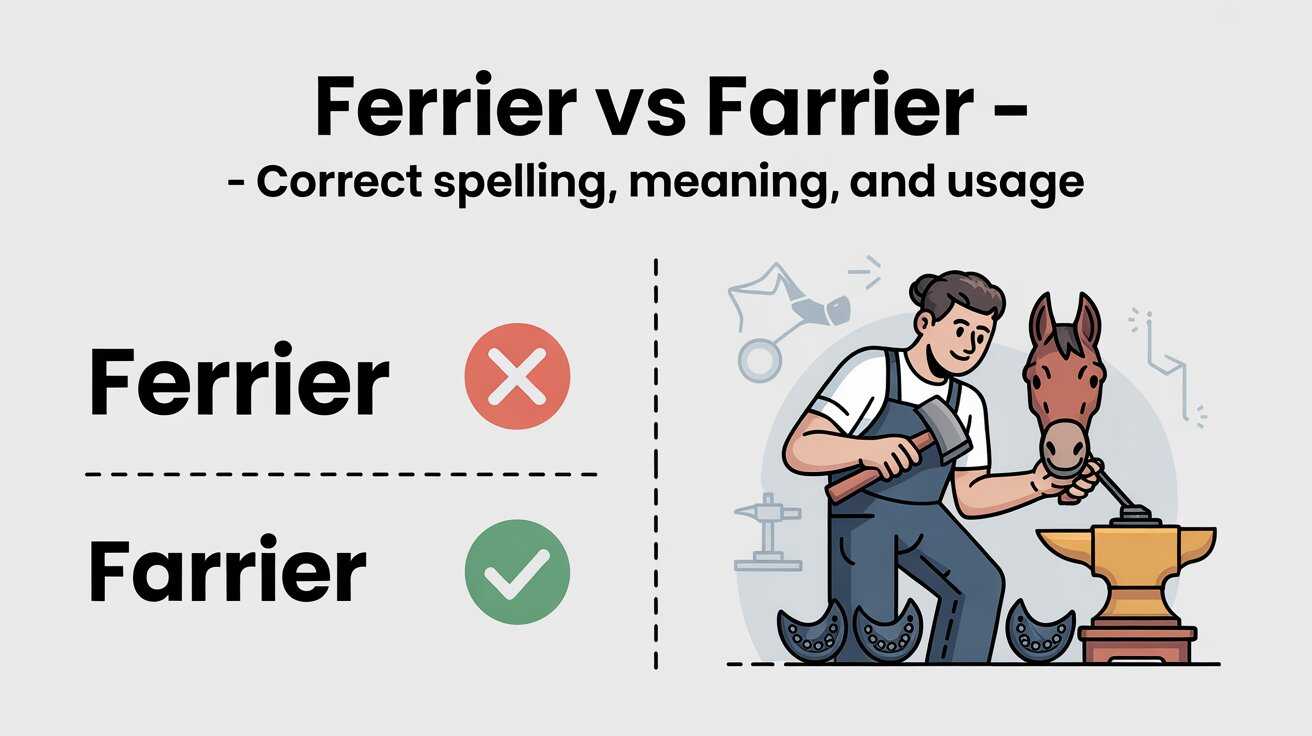
Ferrier vs Farrier is a question that confuses many writers, horse enthusiasts, and English learners alike. Although these words look similar, their meanings, usage, and correct spellings are different. Understanding the distinction is not only important for writing accurately but also for professional and historical references. This article will guide you through the definitions, history, professional context, spelling tips, and practical examples to ensure you never mix them up again.
What Is a Farrier?
A farrier is a professional who specializes in the care of horse hooves, including trimming, balancing, and shoeing them. Farriery combines knowledge of horse anatomy with blacksmithing skills. Farriers play a critical role in ensuring the health and mobility of horses, making their work indispensable in equestrian sports, farming, and horse riding industries.
Responsibilities of a Farrier
A modern farrier’s responsibilities include:
- Trimming hooves to maintain proper shape and balance.
- Fitting horseshoes to protect the hooves from wear.
- Diagnosing hoof problems and suggesting treatments.
- Collaborating with veterinarians to address hoof diseases or injuries.
Farriers are trained professionals who may undergo formal certification programs. In the United Kingdom, for example, the Farriers Registration Council oversees farrier qualifications and professional standards.
Example Sentences with Farrier
- The farrier carefully inspected the horse’s hooves before applying new shoes.
- Learning to become a skilled farrier requires both study and hands-on experience.
- Horse owners often consult a farrier regularly to prevent hoof problems.
What Is a Ferrier?
A ferrier is a less common term historically used as a variant of farrier. While it occasionally appears in older texts, modern English primarily uses “farrier” for hoof care professionals.
In some contexts, ferrier has other meanings, such as a ferryman, which refers to someone who operates a ferry. However, when discussing horses, ferrier is essentially outdated, and most style guides recommend using farrier to avoid confusion.
Example Sentences with Ferrier
- In the 18th century, the village ferrier was known for his skill with horses.
- Some historical texts spell farrier as ferrier, reflecting older English conventions.
Ferrier vs Farrier – Key Differences
Although these words are visually similar, there are clear distinctions. The table below summarizes their differences:
| Feature | Farrier | Ferrier |
|---|---|---|
| Correct Modern Usage | Yes | Rare/Outdated |
| Meaning | Horse hoof care professional | Historical variant of farrier or ferryman |
| Professional Context | Equine care, horseshoeing | Mostly historical or literary |
| Etymology | Latin ferrum (iron), Middle French | Latin ferrum, older French spelling |
| Common Mistakes | None when spelled correctly | Often mistakenly used instead of farrier |
The key takeaway is simple: for any professional or modern writing context about horses, always use farrier. Ferrier vs Farrier
How to Spell It Correctly – Tips & Tricks
Spelling errors are common because ferrier and farrier sound similar. Here are practical tips:
- Remember that farrier has double ‘r’ in the middle and ends with “ier,” which is consistent with blacksmith and horseshoeing terminology.
- Ferrier may appear in historical texts, but it is not standard in modern usage.
- When in doubt, consult dictionaries like Merriam-Webster or Collins for the correct spelling.
Examples in Sentences
- The horse was in perfect condition thanks to the farrier’s careful work.
- Some 19th-century books mistakenly refer to the village ferrier, but they mean farrier.
Farrier Career and Profession
Many people confuse farriers with blacksmiths or ferrymen, but the farrier profession is highly specialized. Here’s what you need to know:
Job Description
A farrier’s duties include trimming, balancing, and shoeing hooves, advising horse owners on hoof care, and collaborating with veterinarians. They may also train apprentices or work in competitive equestrian environments.
Training and Certification
Farriers often undergo formal apprenticeships or certification programs. In countries like the UK and USA, certification ensures they meet professional standards. Skills include:
- Anatomy of the horse hoof
- Blacksmithing
- Shoeing techniques
- Problem-solving hoof issues
Salary and Work Environment
Farriers can work independently, as part of a stable, or in equestrian sports. Salaries vary based on location and expertise, but professional farriers are always in demand due to the specialized nature of their work. Ferrier vs Farrier
Common Mistakes People Make
Even native English speakers sometimes confuse these words. Common mistakes include:
- Writing ferrier instead of farrier in professional contexts.
- Confusing farrier with blacksmiths, who make tools but do not specialize in horseshoes.
- Misinterpreting ferrier as the modern term for a hoof care expert.
Correct usage is critical, especially in academic writing, professional reports, and equestrian publications.
Usage in Literature and Modern English
Historically, ferrier appeared in older literature, often spelled differently across regions. Modern references prefer farrier, especially in professional and educational contexts.
Example in Literature
- “The village ferrier worked tirelessly to shoe the king’s horses,” — 18th-century historical text.
Modern Example
- “The farrier examined each horse before the national riding competition.”
In writing today, always default to farrier unless citing a historical or literary source.
Table: Quick Comparison Recap
| Term | Correct Usage Today | Meaning | Example |
|---|---|---|---|
| Farrier | ✅ Modern English | Horse hoof care professional | “The farrier checked the horse’s hooves.” |
| Ferrier | ⚠ Historical | Older variant of farrier or ferryman | “The ferrier of the village was skilled.” |
Quote:
“A farrier is not just a blacksmith; they are the guardians of equine mobility.”
FAQ Section
Is Ferrier a Real Word?
Yes, but it is largely historical. Modern English prefers farrier when referring to horse hoof care professionals.
When Should I Use Farrier Instead of Ferrier?
Use farrier in any professional, academic, or modern context. Reserve ferrier for historical references or quotes from older texts.
Farrier vs Ferrier in Sentences – Examples:
- Farrier: “The farrier trimmed the horse’s hooves carefully.”
- Ferrier: “In historical records, the ferrier of the village maintained horses for local nobles.”
Difference Between Farrier and Blacksmith:
While farriers focus on horse hooves, blacksmiths work with metal in general. Farriery requires both blacksmithing skills and specialized knowledge of equine anatomy.
Summary / Conclusion
In conclusion, the difference between ferrier and farrier is clear once you understand their meanings and contexts. Farrier is the correct modern spelling for a horse hoof care professional, while ferrier is mostly historical or literary. Always prioritize accuracy in professional writing, and remember these tips:
- Use farrier in all modern contexts.
- Reference ferrier only for historical or literary purposes.
- Consult dictionaries for spelling guidance.
- Avoid common mistakes by understanding professional roles.
By following these guidelines, you can confidently write about horses, hoof care, and equestrian professions without confusion.