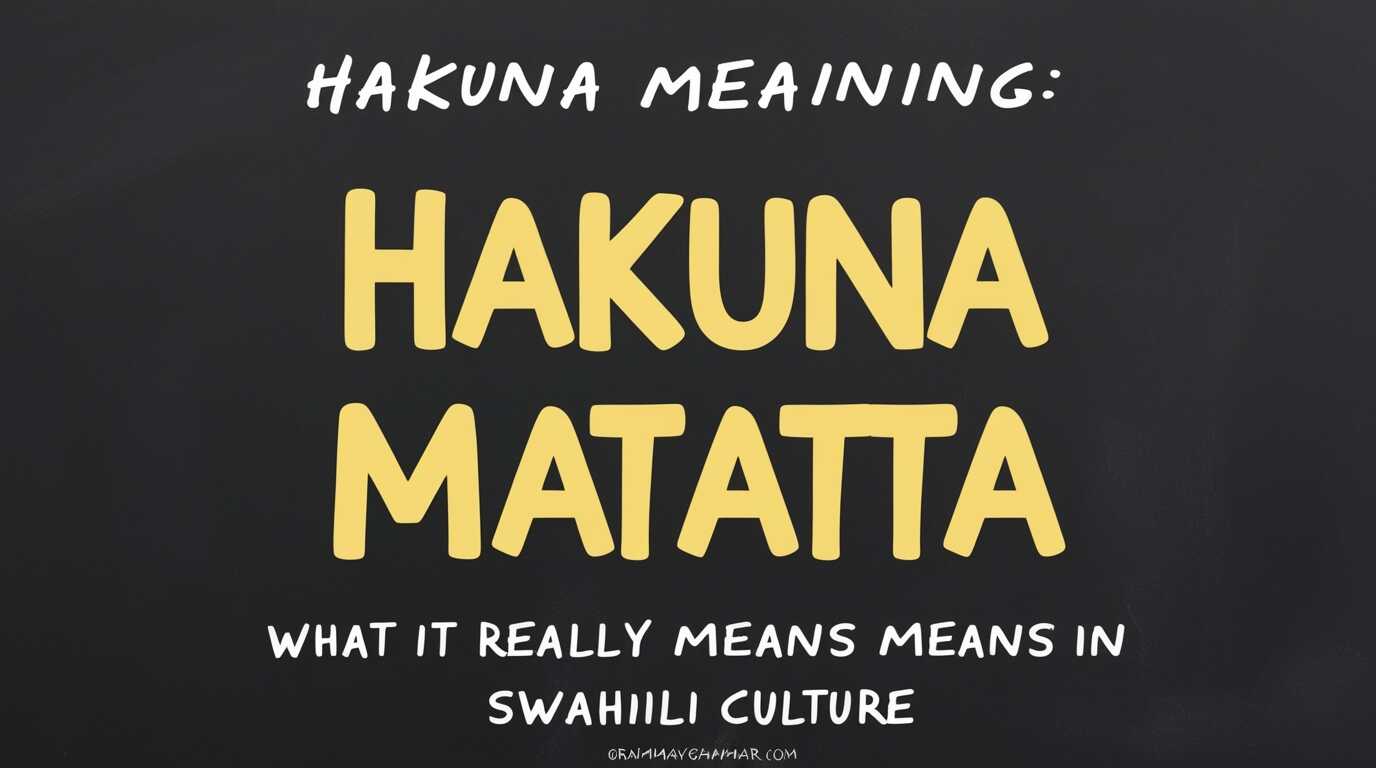
Hakuna matata meaning is often translated as “no worries”, but that simple phrase does not fully capture its depth, cultural roots, or real-world usage. Although the words are widely recognised today, especially through popular culture, their origin and everyday meaning come from lived experiences in East Africa, long before they reached global audiences.
In this article, you will learn what hakuna matata truly means in Swahili, how it is used in daily speech, why it became famous worldwide, and what people often misunderstand about it. At the same time, the explanation stays clear, human, and easy to read, Hakuna Matata Meaning
Quick Summary Table
| Aspect | Explanation |
|---|---|
| Literal meaning | “There are no problems” |
| Language | Swahili |
| Phrase structure | 2-word phrase |
| Cultural tone | Reassurance and calm |
| Global popularity | After The Lion King (1994) |
| Common misunderstanding | Means “carefree forever” |
What Does Hakuna Matata Mean?
In simple terms, hakuna matata means “there are no problems.” In everyday English, it is commonly understood as “no worries” or “no problem.” However, the phrase is not a slogan or a metaphor. In fact, it is a real Swahili expression used naturally in conversation.
People often say hakuna matata when they want to:
- Reassure someone
- Ease tension
- Respond to an apology
- Signal that a situation is under control
As a result, the phrase communicates emotional calm rather than indifference. Hakuna Matata Meaning
Literal Translation of Hakuna Matata (Word by Word)
To understand the phrase properly, it helps to look at each word separately.
What Does “Hakuna” Mean?
Hakuna means “there is not” or “there are no.”
It is a common negative construction in Swahili and appears in many everyday sentences.
What Does “Matata” Mean?
Matata is the plural noun for “problems,” “difficulties,” or “troubles.”
When the two words are combined, the literal meaning becomes:
“There are no problems.”
Because of cultural nuance, English speakers often translate this as “no worries,” which reflects the emotional intention rather than the literal wording.
What Language Is Hakuna Matata From?
Hakuna matata comes from the Swahili language, which is widely spoken across East Africa. Swahili is used in 14+ countries, including Kenya, Tanzania, Uganda, and parts of the Democratic Republic of Congo.
Historically, Swahili developed as a trade language, which explains why many of its phrases are:
- Practical
- Clear
- Emotionally neutral
- Easy to remember
For this reason, phrases like hakuna matata spread easily and remain useful in daily communication. Hakuna Matata Meaning
Cultural Meaning of Hakuna Matata in East Africa
Culturally, hakuna matata is not about ignoring responsibility. Instead, it reflects a calm approach to handling challenges.
In daily life, it often means:
- “This is manageable”
- “There’s no need to panic”
- “We’ll deal with it”
In many East African cultures, staying calm during difficulties is seen as a sign of emotional maturity. Therefore, saying hakuna matata reassures others rather than dismissing the issue.
Is Hakuna Matata a Real Swahili Phrase or Just a Song?
Many people wonder whether hakuna matata existed before it became famous.
The answer is clear: yes, it is a real Swahili phrase.
It was used in daily speech long before it appeared in Western media. However, over time, its meaning slightly shifted in global perception after its use in The Lion King (1994). Hakuna Matata Meaning
How Hakuna Matata Became Famous Worldwide
The Lion King and Global Popularity
The phrase became globally recognised after appearing in The Lion King (1994). During the 1990s, the film introduced millions of viewers to the phrase through music and storytelling.
As a result, hakuna matata came to represent a carefree philosophy of life, which appealed strongly to international audiences.
Traditional Meaning vs Pop Culture Meaning
| Aspect | Traditional Use | Pop Culture Use |
|---|---|---|
| Context | Specific situations | General life attitude |
| Tone | Reassuring | Carefree |
| Meaning | “No current problem” | “No worries ever” |
While this simplified interpretation helped popularise the phrase, it also created misunderstandings. Hakuna Matata Meaning
Common Misunderstandings About Hakuna Matata
Because of its global exposure, hakuna matata is often misunderstood.
Some common misconceptions include:
- Believing it means “never worry about consequences”
- Assuming it promotes laziness
- Thinking it rejects responsibility
In reality, the phrase acknowledges that problems exist, but encourages emotional balance when facing them.
The Deeper Philosophy Behind Hakuna Matata
Some writers link hakuna matata to broader African philosophies such as Ubuntu, which emphasises shared humanity and community responsibility. However, while they are not the same concept, both ideas share important values related to patience, balance, and community.
This connection helps explain why the phrase resonates across cultures, even outside its original linguistic context. Hakuna Matata Meaning
How Is Hakuna Matata Used in Everyday Speech?
In everyday conversation, hakuna matata is informal and friendly. It is often used when:
- Someone apologises
- A delay occurs
- A mistake is minor
- Reassurance is needed
For example:
“Sorry I’m late.”
“Hakuna matata, we just arrived.”
Here, the phrase communicates understanding rather than dismissal.
READ MORE >>> Gauging Interest vs Gaging Interest: Meaning, Differences, and Correct Usage
Is It Respectful for Non-Swahili Speakers to Say Hakuna Matata?
Generally speaking, yes — if it is used respectfully.
What matters most is:
- Tone
- Context
- Intention
Using the phrase sincerely is usually welcomed. However, using it mockingly or as a stereotype may feel disrespectful.
Pronunciation Guide: How to Say Hakuna Matata Correctly
Correct pronunciation shows respect for the language.
| Word | Pronunciation |
|---|---|
| Hakuna | ha-KOO-nah |
| Matata | ma-TA-ta |
The rhythm should sound natural and relaxed, without exaggeration.
Similar Swahili Phrases With Related Meanings
Swahili includes several expressions that convey reassurance and calm.
| Phrase | Meaning |
|---|---|
| Hakuna shida | No problem |
| Pole pole | Slowly, calmly |
| Sawa | Okay / agreed |
Together, these phrases reflect the conversational tone of Swahili.
Why Hakuna Matata Still Matters Today
In a fast-paced world, hakuna matata offers something increasingly valuable: perspective.
It reminds people that:
- Not every problem requires panic
- Calm responses often lead to better outcomes
- Emotional balance is a strength
Because of this, the phrase remains meaningful decades after it became widely known.
Final Summary: What Hakuna Matata Really Means
To summarise:
- Hakuna matata meaning is “there are no problems.”
- It is a real Swahili phrase used across East Africa.
- It expresses reassurance, not irresponsibility.
- Global popularity followed The Lion King (1994).
- Cultural context adds depth beyond “no worries.”
Understanding the phrase properly allows it to be used with accuracy, respect, and human warmth.
Frequently Asked Questions
What does hakuna matata literally mean?
It literally means “there are no problems.”
Is hakuna matata positive or negative?
It is generally positive, conveying reassurance and calm.
Do people actually say hakuna matata in Africa?
Yes. It is commonly used in everyday Swahili conversation.
Is hakuna matata formal or informal?
It is informal and friendly.