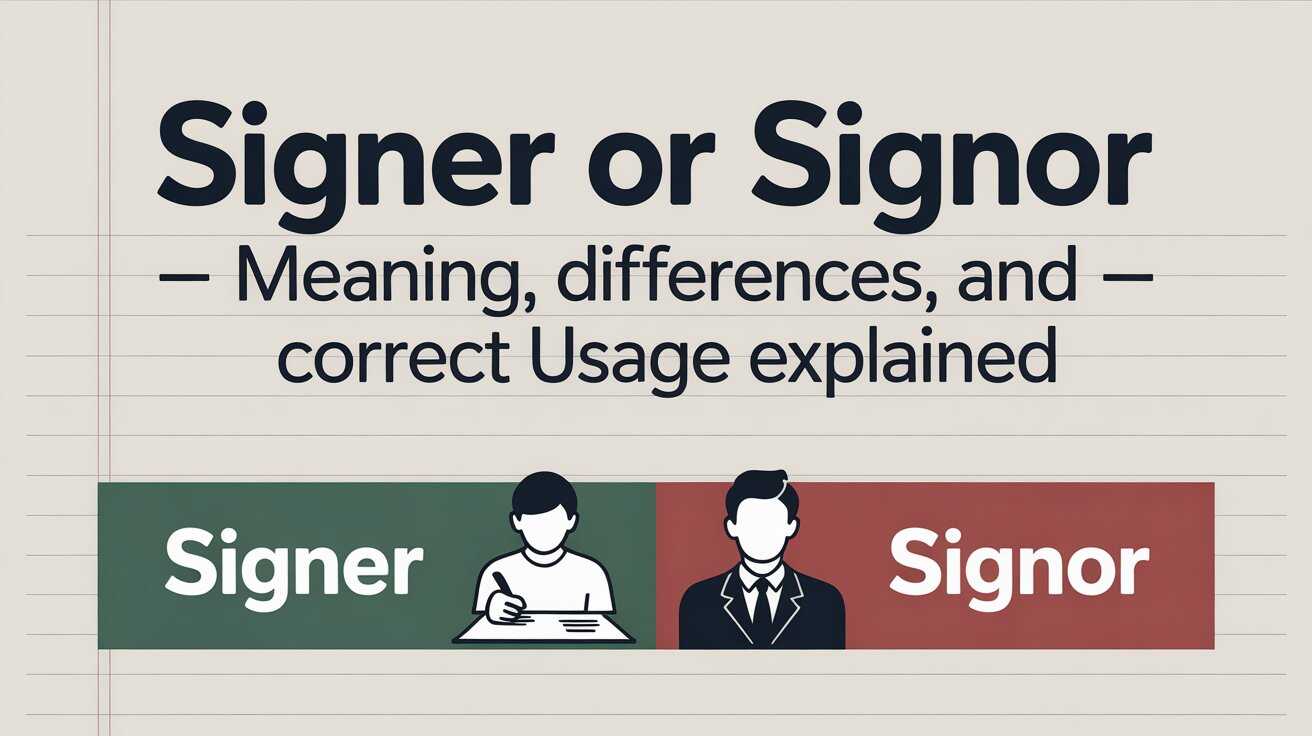
Signer or signor is a confusing word pair that often causes hesitation in writing, especially in legal, professional, and formal contexts. While the two words look almost identical, their meanings, origins, and uses are completely different. Choosing the wrong word can change the intent of a sentence and, in some cases, lead to serious misunderstandings.
This article explains everything you need to know about signer vs signor in simple language. You’ll learn what each term means, where it is used, how to avoid common mistakes, and which word is correct in real-life situations such as legal documents and banking.
Why People Get Confused Between Signer or Signor
The confusion between signor vs signer usually starts with spelling and pronunciation. Both words contain the same letters, arranged almost identically, and are sometimes pronounced similarly by non-native speakers. This makes it easy to assume they are interchangeable.
Another reason for confusion is exposure. People often see the word signer on contracts, forms, and bank documents, while signor appears in movies, books, or travel content related to Italy. Without understanding the origin and meaning of each word, writers may mistakenly use one in place of the other.
What Does “Signer” Mean?
A signer is a person who signs a document, agreement, or form. The word signer comes from the English verb “to sign” and is commonly used in legal, business, and financial contexts.
A signer has authority or responsibility. When someone signs a contract, they become legally bound by its terms. This is why the role of a signer is taken seriously in professional settings.
In simple terms, if a document needs a signature, the person who provides it is the signer.
Examples of signer usage include:
A signer must read all terms carefully before signing.
The company requires an authorized signer for approval.
Each signer is responsible for the accuracy of the information provided.
In some contexts, signer can also refer to a person who uses sign language, but this meaning is less common in formal writing.
What Does “Signor” Mean?
Signor is an Italian word used as a respectful title for a man. It is equivalent to “Mr.” in English. The word has no connection to signing documents or legal authority.
Signor is primarily used in Italian language and culture. You will often see it placed before a man’s last name as a polite form of address.
In English writing, signor appears mainly when referring to Italian individuals, culture, or settings. It is not an English legal or professional term.
Examples of signor usage include:
Good evening, Signor Rossi.
The novel describes Signor Verdi as a respected artist.
Using signor outside of cultural or Italian contexts is usually incorrect.
Signer vs Signor – Understanding the Key Differences
The main difference between signer vs signor lies in meaning, language origin, and usage.
Signer is an English noun used in legal, business, and financial situations. It refers to someone who signs documents and accepts responsibility.
Signor is an Italian honorific title used to address or refer to a man politely. It has no legal or contractual meaning.
A helpful way to remember the difference is this:
If paperwork is involved, the correct word is signer.
If Italian culture or titles are involved, the correct word is signor.
Signor or Signer – Which One Is Correct in Writing?
Choosing between signor or signer depends entirely on context. In English writing, especially professional or academic content, signer is almost always the correct choice.
Signor should only be used when referring to an Italian man or when writing about Italian language, culture, or settings. Using signor instead of signer in English documents is considered an error.
For example, writing “the signor must approve the contract” is incorrect. The correct sentence is “the signer must approve the contract.”
Bank Account Signer or Signor – Which Term Is Correct?
One of the most common questions people ask is about bank account signer or signor. The correct term in banking and finance is always signer.
A bank account signer is a person who has legal authority to access, manage, or authorize transactions on a bank account. This includes signing checks, approving transfers, and making financial decisions.
The term signor has no meaning in banking, finance, or law. Using it in a bank document would be incorrect and potentially confusing.
Banks, financial institutions, and legal systems recognize only the term signer when referring to account authority.
Common Mistakes People Make With Signer and Signor
One common mistake is assuming that signor is simply a more formal version of signer. This is incorrect. The two words are unrelated.
Another frequent error is using signor in legal writing because it “sounds professional.” In reality, this mistake can undermine credibility and clarity.
Some writers also confuse signor with similar words like “senor” from Spanish or “signatory” from legal terminology. Each word has a different meaning and usage.
Avoiding these mistakes requires understanding the origin and context of each term.
Related Words People Often Confuse With Signer or Signor
Signer is sometimes confused with signatory or signee. A signatory is a person who formally represents an organization in signing an agreement, while a signee is someone who receives or is assigned a document.
Signor is sometimes confused with signore, which is another Italian term. Signore is more commonly used in modern Italian, while signor appears in formal or traditional contexts.
Understanding these distinctions helps improve accuracy and confidence in writing.
Grammar and Language Rules That Help Avoid Confusion
A simple grammar rule can help you avoid mixing up signer or signor. Always consider the language of origin. English legal and professional writing uses signer. Italian titles and cultural references use signor.
Another helpful rule is context checking. Ask yourself whether the sentence involves documents, contracts, or authority. If it does, signer is the correct choice.
These simple checks can prevent errors and improve clarity.
Quick Comparison Between Signer and Signor
Signer is an English word used in legal, financial, and professional contexts. It refers to a person who signs documents and holds responsibility.
Signor is an Italian title used as a respectful form of address for a man. It has no legal or contractual meaning.
Remembering this contrast makes choosing the correct word easy.
Frequently Asked Questions About Signer or Signor
Is signor an English word?
No, signor is an Italian word and not part of standard English vocabulary.
Can signor be used instead of signer?
No, signor should never replace signer in English writing.
Is signer used in banking and legal documents?
Yes, signer is the correct and legally recognized term.
Why do people confuse signer and signor?
Because of similar spelling, pronunciation, and lack of awareness about language origin.
Final Verdict on Signer or Signor
Understanding the difference between signer or signor is essential for clear and correct writing. Signer is the correct word in English for legal, business, and banking contexts. Signor is an Italian title used only in cultural or linguistic references.
When in doubt, remember this simple rule: documents require a signer, not a signor. Using the correct word improves clarity, professionalism, and credibility in your writing.
By mastering this distinction, you can confidently choose the right word every time and avoid one of the most common language mistakes.