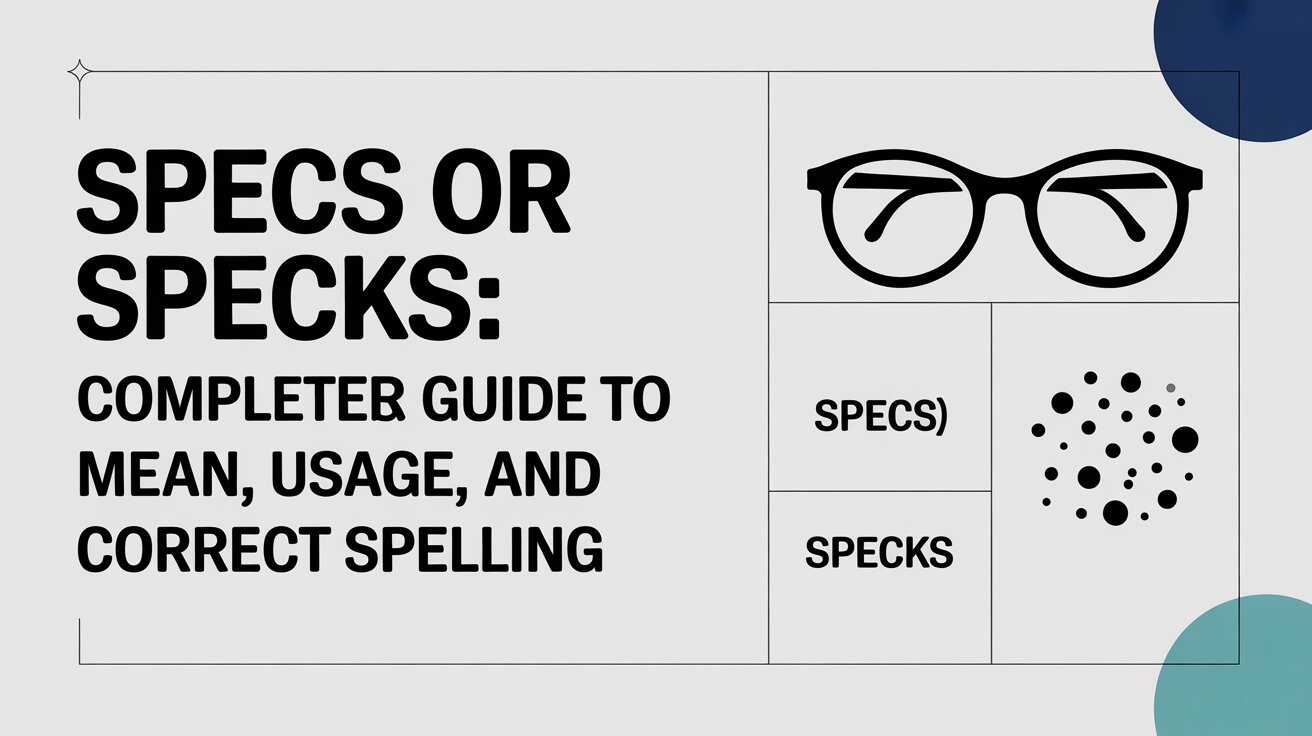
Quick Answer: “Specs or specks are homophones but have different meanings. Specs usually refers to glasses or technical specifications, while specks are tiny particles or spots. Use ‘specs’ when talking about eyewear or devices, and ‘specks’ for dust, dots, or figurative expressions. Context determines which is correct.”
Introduction
When it comes to writing, few things confuse people more than specs or specks. Both words sound identical, but their meanings diverge significantly. Many writers and ESL learners struggle with choosing the right word in professional emails, school essays, or casual writing. In this guide, we’ll break down every nuance of specs or specks meaning, explore usage in different contexts, provide practical examples, and share expert tips to never mix them up again.
Core Difference Between Specs and Specks
Understanding the difference starts with a clear definition.
Meaning of Specs
- Glasses: Informally, specs are spectacles worn on the eyes.
- Example: She forgot her specs at home and couldn’t read the menu.
- Technical Specifications: In technology or products, specs indicate detailed features.
- Example: The laptop’s specs include a 16GB RAM and 512GB SSD.
Meaning of Specks
- Tiny Particles: Specks are minute dots, particles, or flecks.
- Example: There were specks of dust on the windowsill.
- Figurative Use: Often used metaphorically.
- Example: Not a speck of doubt remained after the presentation.
Comparison Table – Specs vs Specks
| Word | Meaning | Common Context | Example Sentence |
|---|---|---|---|
| Specs | Glasses / Technical specs | Eyewear / Tech products | “Check the specs of your tablet.” |
| Specks | Tiny spots / particles | Dust, spots, figurative | “There were specks of dust everywhere.” |
Pronunciation and Homophones
Even though specs and specks sound the same, pronunciation plays a key role in learning and communication.
Phonetic Guide
- Specs: /spɛks/
- Specks: /spɛks/
Note: The identical pronunciation is why many ESL learners and casual writers confuse the two.
ESL & Writing Challenges
Mini Case Study: A student submitted an essay using specks instead of specs for glasses:
“I forgot my specks, so I couldn’t see the board.” Corrected version: “I forgot my specs, so I couldn’t see the board.”
Expert Tip: Remember: specs = glasses/tech; specks = tiny particles.
AI Overview Summary
AI Overview: The terms specs and specks sound the same but are distinct. Specs can mean spectacles (glasses) or technical specifications in devices, while specks refers to tiny particles, spots, or metaphorical uses. Understanding pronunciation, usage, and context helps avoid common mistakes, especially in professional writing or ESL learning. This article provides comparisons, examples, pronunciation guidance, and expert tips.
: Origins and Etymology
Knowing the origin of a word can help cement its proper usage.
History of Specs
- Short for spectacles, originating from Latin spectare (to look).
- Later adopted in tech as specifications, detailing product features.
: History of Specks
- From Old English speck, meaning small mark or particle.
- Retains literal and figurative usage in modern English.
Expert Tip: Contextualizing the word historically aids ESL learners in remembering the difference.
Usage in Different Contexts
Casual vs Formal English
- Specs (glasses): Informal and everyday English.
- Specs (technical): Formal, professional context for devices.
- Specks: Mostly literal, occasionally figurative.
Regional Variations
- UK and US English: specs = glasses in UK; specs = product features in US.
- Specks usage remains consistent across regions.
Technical Specs Context
- Devices like laptops, phones, or cameras.
- Example: Before buying, check the specs for RAM, storage, and battery life.
Figurative Specks* (Unique H4)*
- Example: Not a speck of truth – used in literature and speech.
- Micro-example: The sky had not a speck of cloud that morning.
READ MORE >>> Finalized or Finalised: Complete Guide to US & UK Spelling, Usage, and Context
Common Mistakes & How to Avoid Them
Mixing the Words
- Mistake: “I need my specks to read the book.”
- Correction: “I need my specs to read the book.”
Overgeneralizing Specs
- Using specs for both glasses and product features without context confuses readers.
- Expert Tip: Always clarify by context (eyewear vs tech).
Contextual Traps
- Emails, documents, and casual writing often reveal misuse.
- Micro-example: A manager writing “Check the specks before submission” → correct: “Check the specs before submission.”
Quick Reference Table *
| Word | Meaning | Context | Example | Notes |
|---|---|---|---|---|
| Specs | Glasses / Tech specs | Casual / Professional | “Check the specs before buying.” | Dual meaning; depends on context |
| Specks | Tiny particles | Literal / Figurative | “Specks of dust were everywhere.” | Rarely used in tech context |
FAQ Section – Targeting People Also Ask (PAA)
- Is specs or specks correct? Both are correct, but context determines the usage. Specs = glasses/tech, specks = particles/dots.
- Can specs mean glasses and specifications? Yes, it’s a dual meaning word. Clarify by context: eyewear vs devices.
- Are specs and specks homophones? Yes, they sound the same but differ in meaning and spelling.
- Is there a figurative use of specks? Yes, often in expressions like “not a speck of doubt” or literary metaphors.
- Which term is more common in professional writing? Specs is common in tech contexts; specks appears in descriptive writing, literature, and figurative speech.
Conclusion – Humanized Summary
The difference between specs or specks may seem subtle, but mastering it prevents embarrassing mistakes and improves clarity in writing. Specs = glasses or technical details; specks = tiny particles, spots, or figurative elements. Using tables, pronunciation guides, examples, and expert tips can make learning effortless. Remember: context is everything, and consistency is key in both professional and casual writing.