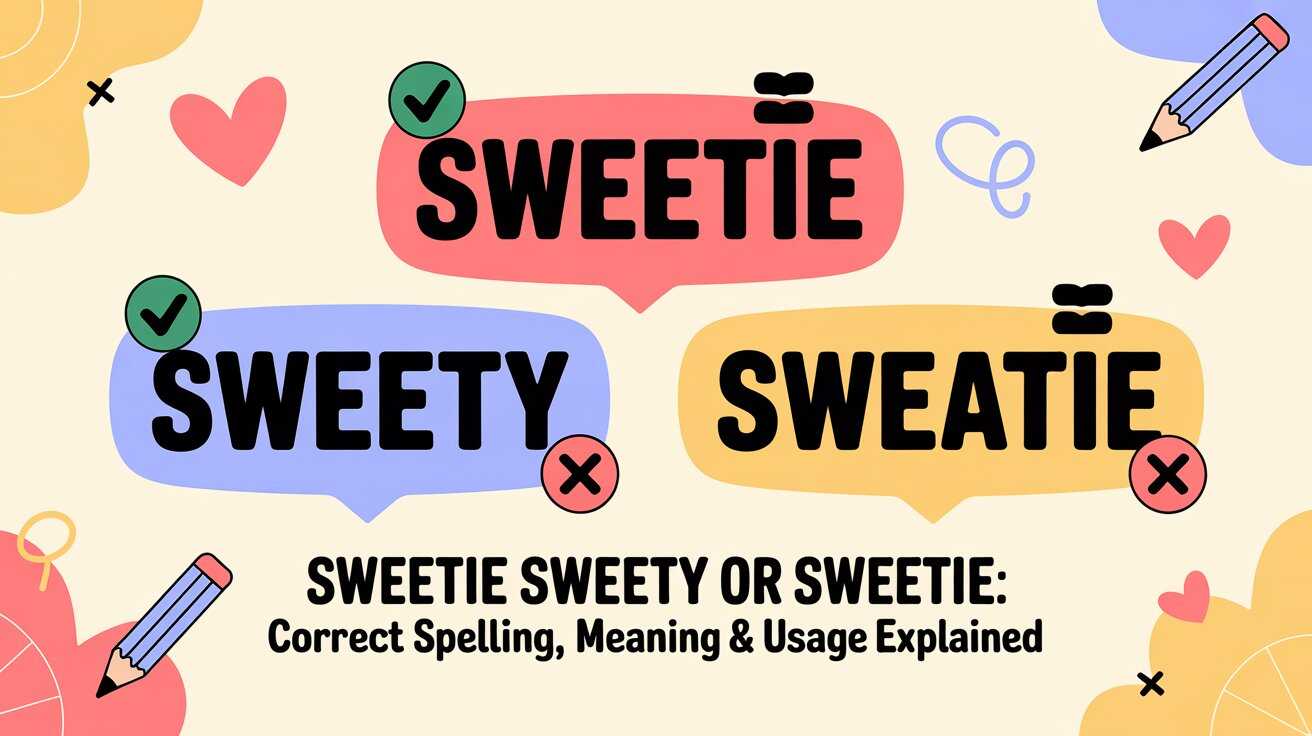
Sweetie Sweety or Sweatie is a topic that often confuses English learners and native speakers alike. People frequently wonder which spelling is correct, whether some versions are informal or incorrect, and how to use these terms in everyday conversation. In this article, we’ll explain the meanings, differences, proper usage, and examples so that you can confidently use affectionate terms in English messages, writing, and conversation.
What Does “Sweetie” Mean?
“Sweetie” is a widely accepted term of endearment used to express affection for someone dear. It can be used for a partner, child, friend, or family member. The term conveys warmth, care, and love, making it one of the most common English words for showing fondness.
Example sentences:
- “Good morning, sweetie! Did you sleep well?”
- “Thanks for helping me, sweetie; you’re the best.”
- “I love spending time with you, sweetie.”
The word “sweetie” is versatile and can be used in both casual and slightly formal contexts where affection is appropriate.
Sweety vs Sweetie: Which Is Correct?
Many people write “sweety” instead of “sweetie,” especially in informal chats or text messages. While “sweety” is often understood, it is considered non-standard English and is less widely recognized.
Differences Between Sweetie and Sweety
| Variant | Correctness | Usage Context | Example Sentence |
|---|---|---|---|
| Sweetie | ✅ Standard | Formal & Informal | “Good morning, sweetie.” |
| Sweety | ⚠ Informal | Casual, texting | “Hey sweety, how are you?” |
| Sweatie | ❌ Incorrect | Usually a typo or misspelling | “Hi sweatie, want to hang out?” |
Using “sweetie” ensures clarity and correctness, while “sweety” can be reserved for very casual conversations, primarily with friends or in informal texting environments.
Sweatie – Mistake or Real Word?
“Sweatie” is generally a spelling mistake. People often confuse it with “sweetie” or miswrite it due to typing errors. Unlike “sweetie” and “sweety,” “sweatie” does not have a recognized meaning in English. Using it in writing or professional contexts can lead to misunderstandings.
Incorrect usage examples:
- “Hi sweatie, how are you today?” ✅ (wrong)
- “Thanks, sweatie!” ❌
It’s best to avoid “sweatie” entirely and stick with either “sweetie” for standard usage or “sweety” for casual chats.
How to Use Sweetie and Sweety in Sentences
Correct usage depends on the context. Here are examples in different scenarios:
Text Messages / Casual Conversation:
- “Hey sweety, are you coming to the party tonight?”
- “Thanks for the gift, sweetie!”
Professional or Semi-Formal Contexts:
- Avoid using affectionate terms in professional emails unless it’s a very close colleague in a casual office.
- “Dear sweetie” is not suitable for formal correspondence.
Family or Romantic Contexts:
- “Sweetie, don’t forget your homework.”
- “Good night, sweetie. Sleep well!”
The main goal is to use affectionate terms appropriately without confusing readers or sounding unprofessional.
Professional vs Casual Usage of Sweetie and Sweety
It’s important to understand where these words are appropriate.
Casual Usage:
- Text messages to friends, family, or romantic partners.
- Social media interactions where tone is informal.
Professional or Academic Context:
- Terms like “sweetie” or “sweety” are usually not appropriate in work emails, academic writing, or formal letters.
- If you must express warmth in a professional setting, choose neutral phrases like “dear colleague” or the person’s name.
This distinction helps avoid misunderstandings and ensures proper tone in communication.
READ MORE >>> What Does Evocative Mean? Definition, Examples, and Complete Usage Guide
Common Mistakes People Make
Many learners make errors when using these affectionate words. Common mistakes include:
- Using “sweatie” – a frequent misspelling.
- Confusing informal vs standard spelling – writing “sweety” in formal contexts.
- Overusing the term – can make writing sound too casual or unprofessional.
- Incorrect punctuation – forgetting commas after addressing someone directly, e.g., “Hi sweetie, how are you?”
By paying attention to spelling, context, and tone, you can use these words correctly and naturally.
Regional and Cultural Notes
Some variations of spelling, like “sweety,” may appear in different regions or cultures. For example, in parts of India or Pakistan, “sweety” is sometimes used casually in conversation or texting.
Cultural nuance also plays a role: in Western countries, “sweetie” is universally recognized, while regional informal spellings might confuse readers unfamiliar with them. Knowing these subtleties ensures your writing feels natural and culturally appropriate.
Fun and Related Nicknames
There are plenty of affectionate alternatives to “sweetie” or “sweety” that can be used in different contexts:
- Romantic nicknames: darling, honey, baby, love
- Friendly or casual nicknames: buddy, pal, champ, cutie
- Creative or cute nicknames: cupcake, muffin, sunshine
Choosing the right nickname depends on the relationship, context, and tone you want to convey.
Origin and History of “Sweetie”
Understanding where “sweetie” comes from can add depth to your content.
- The word sweetie originates from the adjective “sweet”, meaning pleasant, kind, or dear. Over time, it evolved into a term of endearment in English-speaking countries.
- First recorded use in the 1800s, it became popular in letters, romantic writing, and everyday speech.
- The historical perspective helps readers see why “sweetie” is the standard spelling and why alternatives like “sweety” or “sweatie” arose as informal or mistaken variants.
Example sentence:
- “In Victorian letters, young couples often wrote ‘sweetie’ to show affection.”
Tips for Using Affectionate Nicknames Appropriately
This section provides practical advice, something competitors often skip.
- Know your audience: Use “sweetie” with people you are close to; avoid in formal or professional contexts.
- Context matters: Romantic partners, family, and close friends are fine, but colleagues or strangers are not.
- Balance repetition: Overusing affectionate terms can feel insincere or too casual.
- Alternative nicknames: Use “honey,” “darling,” or “friend” depending on tone and relationship.
Example:
- Casual text: “Hey sweety, are you free tonight?” ✅
- Professional email: Avoid: “Dear sweetie, please review this report.” ❌
Common Misconceptions About Sweetie, Sweety, and Sweatie
Clearing up myths can improve your content’s value.
- Myth 1: “Sweatie is just a cute variant.”
- Truth: Sweatie is incorrect and not recognized in English dictionaries.
- Myth 2: “Sweety is wrong.”
- Truth: Sweety is informal but understood in casual conversations.
- Myth 3: “Sweetie can only be romantic.”
- Truth: Sweetie can also be used for friends, children, or family.
By addressing misconceptions, you make your article more trustworthy and improve user satisfaction.
FAQ Section
Q1: Is sweatie a real word? No, “sweatie” is generally a typo or misspelling of “sweetie.” It is not recognized in standard English.
Q2: Can I use sweety instead of sweetie in professional writing? No, “sweety” is informal. For professional writing, avoid affectionate nicknames entirely.
Q3: What is the correct spelling: sweetie or sweety? “Sweetie” is the standard spelling. “Sweety” is acceptable in casual or informal contexts.
Q4: How do I use sweetie in a sentence? Examples include:
- “Thanks for your help, sweetie.”
- “Good night, sweetie, sleep well.”
Q5: Are there cultural differences in using sweetie or sweety? Yes, “sweetie” is universally recognized, while “sweety” may appear more in informal texting or certain regions.
Conclusion
In summary, the correct, standard spelling is “sweetie”. The variant “sweety” can be used in informal settings, while “sweatie” should be avoided as it is incorrect. Understanding the differences, usage contexts, and cultural nuances allows you to communicate affection naturally and appropriately. By following this guide, you can confidently use these terms in conversation, writing, and messaging without worrying about spelling mistakes or tone.
Meta Description (for SEO, 155 characters): Learn the difference between Sweetie, Sweety, and Sweatie. Discover correct spelling, meanings, usage examples, and common mistakes in English.