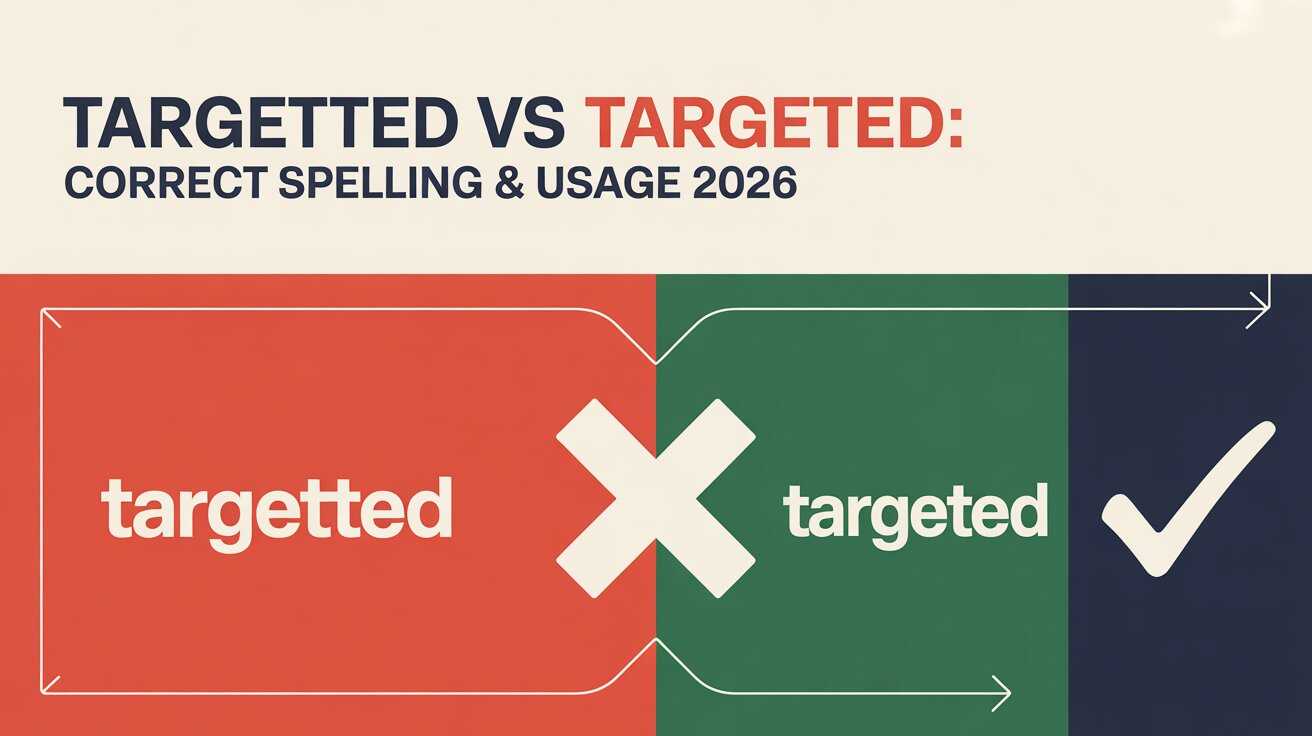
Quick Answer Box Targeted is the correct spelling in English; targetted is considered incorrect in both American and British usage. Use targeted for past tense or past participle of “target,” while targeting applies as the present participle. Always double-check context, especially in marketing or academic writing, to ensure proper usage. Targetted vs Targeted
AI Overview Summary
This article breaks down the spelling confusion between targetted vs targeted, explains the rules behind consonant doubling, highlights regional variations, and provides real-world examples.
You’ll learn how to use targeted vs targetted correctly in professional, academic, and casual writing. Additionally, we’ll compare it with targeting to prevent common mistakes, explore ESL learner pitfalls, and offer expert tips and mini case studies.
What Does “Targeted” Mean?
Definition in Grammar & Usage
Targeted is the past tense and past participle of the verb target. It indicates that an action was directed toward a specific object, group, or outcome. For example:
- “The marketing team targeted young adults for the campaign.”
- “This email campaign was targeted at loyal customers.”
By contrast, targetted is a misspelling and should be avoided in formal writing.
Part of Speech: Verb vs Adjective
- Verb (past tense): “They targeted the wrong audience.”
- Adjective: “The targeted strategy yielded better results.”
- Micro-Example: ESL learners often confuse targeting vs targeted, thinking they’re interchangeable; the tense and role in a sentence matter.
Why “Targetted” is Incorrect
Spelling Rules Explained
| Rule | Correct Form | Incorrect Form | Example |
|---|---|---|---|
| Single-syllable verbs ending with consonant + vowel + consonant | Double consonant if stressed | N/A | “Hop → hopped” |
| Multi-syllable verbs ending with consonant + vowel + consonant | Usually do not double if stress is on first syllable | “targetted” | “Target → targeted” |
Expert Tip: Even some automated spell-checkers incorrectly flag “targetted” as correct. Rely on standard dictionaries like Oxford or Merriam-Webster.
Common Misconceptions
- Many writers assume all CVC (consonant-vowel-consonant) verbs double their final consonant in past tense.
- “Target” is two syllables, with stress on the first; therefore, doubling the consonant is incorrect.
Regional Differences (US vs UK English)
Both American and British English use targeted. Historically, “targetted” may appear in older British texts, but it is not standard today.
READ MORE >>> Indulgent vs Sober: Meaning, Personality Traits, Examples, Usage
Targeting vs Targetted / Targeted
Present Participle Form “Targeting”
Use targeting when describing ongoing action:
- “The company is targeting a new demographic.”
Comparison Table: Targeting vs Targeted vs Targetted
| Form | Correct? | Usage Example |
|---|---|---|
| Targeting | ✅ Yes | “We are targeting new customers this quarter.” |
| Targeted | ✅ Yes | “The ads were targeted to loyal subscribers.” |
| Targetted | ❌ No | “The ads were targetted to loyal subscribers.” (Incorrect) |
Phrase Differences: “Targeted at” vs “Targeting”
- Targeted at: past action, already directed
- Targeting: ongoing action
- Mini Case Study: A marketing team ran two campaigns: one targeted at millennials, one targeting Gen Z over six weeks. The distinction in tense helped report campaign analytics accurately.
Side by Side Comparison
A side-by-side table visually clarifies the difference between correct and incorrect forms.
| Form | Correct? | Part of Speech | Usage Example |
|---|---|---|---|
| Targeted | ✅ Yes | Past tense / Past participle | “The campaign was targeted at loyal customers.” |
| Targetting | ❌ No | Incorrect form | “The campaign was targetting at loyal customers.” |
| Targetted | ❌ No | Incorrect form | “The ads were targetted to students.” |
| Targeting | ✅ Yes | Present participle / Continuous | “The company is targeting Gen Z users.” |
Micro-Example:
- Incorrect: “The newsletter was targetted at subscribers.”
- Correct: “The newsletter was targeted at subscribers.”
This table is perfect for Featured Snippets, as Google often favors clear visual comparisons.
. Spelling Rule: Double the Trouble?
Many writers get confused about doubling consonants. Here’s the rule in plain English:
- Single-syllable verbs with consonant-vowel-consonant (CVC): Double the final consonant if stressed.
- Example: hop → hopped ✅
- Multi-syllable verbs with stress not on final syllable: Do NOT double the final consonant.
- Example: target → targeted ✅
- Incorrect: target → targetted ❌
Expert Tip: Even some spell-checkers mistakenly accept targetted, so always rely on Oxford or Merriam-Webster dictionaries for confirmation.
Micro-Example:
- “We targeted new clients successfully.” ✅
- “We targetted new clients successfully.” ❌
. Decoding the Correct Spelling: “Targetted” or “Targeted”?
The confusion arises because English has many inconsistent spelling rules. Here’s a breakdown:
- Targeted: Correct spelling, used for past tense and as an adjective.
- Targetted: Incorrect; doubling the “t” is unnecessary due to stress patterns.
- Targeting: Present participle, used for ongoing action.
Quick Writing Rule:
Use targeted for past actions or when describing completed strategies. Use targeting for ongoing actions. Never use targetted.
Mini Case Study (Marketing Context): A digital marketing agency ran two campaigns:
- Campaign A: targeted at millennials (past, completed campaign)
- Campaign B: targeting Gen Z (ongoing strategy) Correct usage ensured clear reporting and professional communication with clients. Misusing “targetted” could confuse team members and reflect poorly on professionalism.
Everyday Usage Examples
Academic Writing:
- “The research was targeted at students with prior experience in online learning.”
- “This intervention is targeted to improve reading comprehension.”
Business / Marketing:
- “Our email campaign was targeted at loyal subscribers.”
- “The company is targeting tech-savvy users with its new app.”
Casual / Everyday English:
- “I targeted the right audience with my blog post.”
- “She is targeting recipes that are gluten-free.”
Examples of Correct Usage
Academic Writing Examples
- “The study targeted participants with prior experience in online education.”
- “This research methodology is targeted toward improving comprehension scores.”
Business / Marketing Examples
- “The new social media ads were targeted at loyal customers.”
- “Our company is targeting small businesses in urban areas.”
Casual / Everyday English
- “I targeted the right audience with my blog post.”
- “She is targeting recipes that are gluten-free.”
Common Errors & ESL Learner Pitfalls
Typical Mistakes
- Using targetted instead of targeted.
- Confusing targeted with targeting.
- Misplacing at in “targeted at” versus “targeting.”
How to Avoid Them
- Expert Tip: Always identify the verb tense first: ongoing (targeting) or past (targeted).
- Use spell-checkers cautiously; check dictionaries for confirmation.
Mini Case Study: ESL Corrections
- Incorrect: “The ads were targetted for students.”
- Corrected: “The ads were targeted at students.”
- Teaching Moment: Highlighted how doubling the consonant violates stress rules.
Synonyms and Related Terms
| Term | Part of Speech | Usage Example |
|---|---|---|
| Targeting | Verb / Gerund | “We are targeting eco-conscious consumers.” |
| Targetable | Adjective | “This audience is highly targetable.” |
| Directed | Adjective | “The strategy was directed at new subscribers.” |
| Focused | Adjective | “We ran a focused marketing campaign.” |
FAQ Section
- Is targetted ever correct? ❌ No. Targetted is considered incorrect in both US and UK English. Use targeted.
- When should I use targeted vs targeting? Use targeting for ongoing action, targeted for past action or adjective.
- Why isn’t the consonant doubled in targeted? The stress is on the first syllable of “target,” so doubling is unnecessary according to English spelling rules.
- Can I use “targeted to” instead of “targeted at”? Standard usage is targeted at; “targeted to” is less common and often flagged in formal writing.
- Does spell-checker always catch targetted as wrong? Not always. Some automated tools may mistakenly accept it. Always verify with dictionaries or style guides.
Conclusion & Expert Recommendations
The difference between targetted vs targeted is simple once you understand the rules. Targeted is always correct, while targetted is incorrect. Remember: targeting describes ongoing action, targeted describes past action or serves as an adjective, and always pair with the correct preposition (“at” for standard English).
Expert Tip: When writing marketing copy, academic papers, or casual emails, use targeted consistently to maintain professionalism. Include tables or mini case examples when teaching others or editing content.