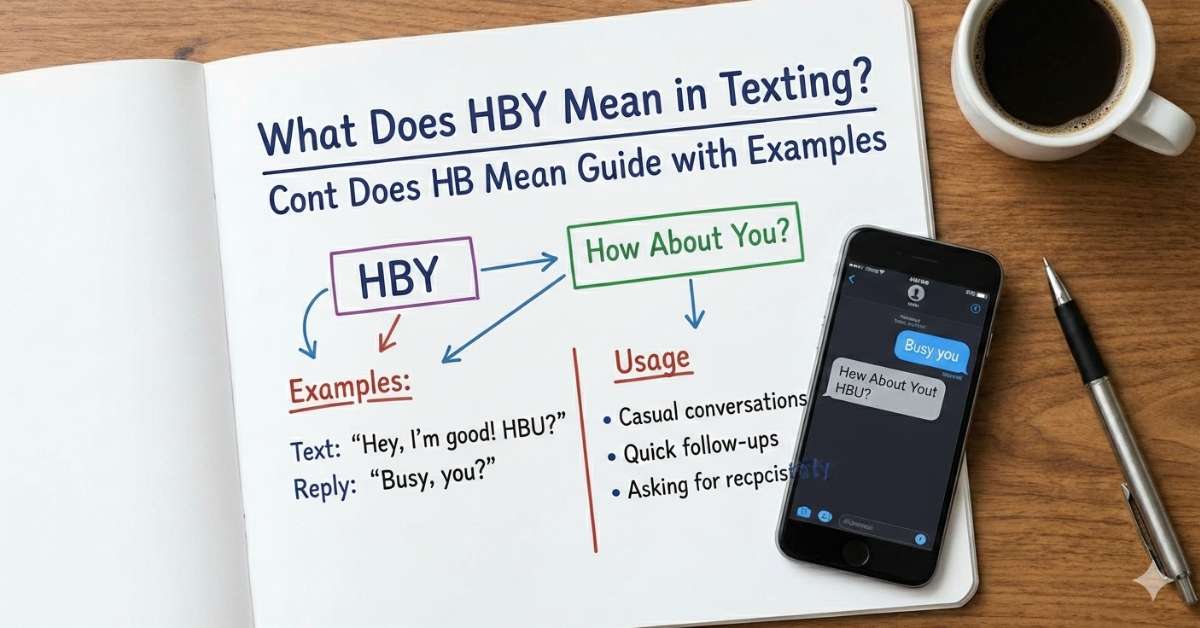
What does HBY mean in texting? If you’ve ever received a message with “HBY” and felt unsure about its meaning, you’re not alone. In today’s fast-paced digital world, abbreviations and internet slang are everywhere. People shorten words to save time, type faster, and keep conversations flowing naturally. One such popular texting abbreviation is HBY, which stands for “How About You?”
This simple phrase is widely used in casual chats, social media DMs, and messaging apps to return a question and show interest in the other person. In this detailed guide, you’ll learn the meaning of HBY, how to use it correctly, where it fits best, and how to respond when someone sends it to you.
What Does HBY Stand For? (Simple Definition)
HBY stands for “How About You?”
It is a short form used in texting and online chats to ask someone the same question they just asked you or to continue a conversation politely.
For example:
“I’m feeling great today, HBY?”
Here, HBY means:
“How about you?”
Key Facts About HBY
- Full form: How About You
- Type: Texting abbreviation / initialism
- Tone: Informal and friendly
- Usage: Casual conversations
- Pronunciation: Aitch-Bee-Why
In simple terms, HBY is a shortcut that keeps conversations smooth and interactive.
How Is HBY Used in Texting and Online Chats?
People use HBY mainly to return a question and show interest in the other person’s response. It helps avoid long typing while keeping communication polite.
Using HBY to Continue a Conversation
HBY is often used after answering a question.
Example:
“I just finished my homework. HBY?”
This shows that you care about the other person’s situation too.
Using HBY as a Casual Reply
HBY fits naturally in friendly and relaxed chats.
Example:
“I’m watching a movie right now, HBY?”
It makes conversations feel balanced and mutual.
When HBY Sounds Natural vs Awkward
Natural Usage
- After answering a question
- With friends and close contacts
- In casual messaging
Awkward Usage
- In formal emails
- In professional settings
- In serious discussions
Using HBY in the wrong context may seem careless or unprofessional.
Examples of HBY in Real Text Conversations
Understanding examples helps you see how HBY works in real life.
Friendly Conversations
Example 1
A: “I’m feeling tired today.”
B: “Same here, HBY?”
Example 2
A: “Just got back from school.”
B: “Nice! HBY?”
Social Media and DMs
Example 3 (Instagram DM)
“I loved that post! I’m doing well today, HBY?”
Example 4 (WhatsApp Chat)
“Busy with work today, HBY?”
Dating and Flirty Chats
Example 5
“I’ve been thinking about you all day 😊 HBY?”
Example 6
“Just had coffee and it was amazing. HBY, cutie?”
Using HBY in dating chats can sound friendly and inviting when used properly.
Group Chats
Example 7
“I’m free this weekend, HBY everyone?”
This invites multiple people to share their plans.
How to Respond When Someone Texts “HBY?”
When someone sends you HBY, they are asking about you. Your reply should match the tone of the conversation.
Simple Replies
- “I’m good, thanks.”
- “Doing fine.”
- “Pretty relaxed today.”
Engaging Replies
- “I’m good! Just finished my work.”
- “Feeling great after the gym.”
Flirty Replies
- “Better now that I’m talking to you 😉”
- “Missing you, honestly. HBY?”
Professional-Safe Alternatives
If you want to stay polite and formal:
- “I’m doing well, thank you.”
- “Everything is going well on my end.”
Where Is HBY Commonly Used? (Platforms and Contexts)
HBY appears on many digital platforms where informal messaging is common.
| Platform | Usage of HBY | Common Context |
|---|---|---|
| Very High | Personal chats | |
| Instagram DMs | High | Casual talks |
| Snapchat | High | Friendly snaps |
| SMS/Text | Medium | Daily texting |
| Gaming Chats | Medium | Team messages |
| Dating Apps | High | Icebreakers |
HBY works best in platforms that support relaxed communication.
Is HBY Formal or Informal? (Tone and Etiquette Guide)
HBY is mainly informal.
Casual Situations (OK to Use)
- Chatting with friends
- Talking to classmates
- Messaging family
- Social media conversations
Professional Situations (Avoid)
- Office emails
- Client messages
- Job applications
- Academic communication
Safer Alternatives for Work
Instead of HBY, use:
- “How are you?”
- “How are things on your end?”
- “I hope you’re doing well.”
Using full sentences shows professionalism and respect.
HBY vs Similar Texting Abbreviations
Many abbreviations are similar to HBY. Here is a comparison table:
| Abbreviation | Full Form | Meaning | Usage Level |
|---|---|---|---|
| HBY | How About You | Return question | Common |
| HBU | How About You | Same as HBY | Very Common |
| WBU | What About You | Similar meaning | Moderate |
| HRU | How Are You | Greeting | Very Common |
Among these, HBU is more popular than HBY, but both mean almost the same.
Why Do People Use HBY Instead of Full Sentences?
There are several reasons why texting abbreviations like HBY are popular.
1. Saves Time
Typing “HBY” is faster than “How about you?”
2. Improves Conversation Flow
Short replies keep chats quick and natural.
3. Fits Mobile Typing Habits
People prefer shorter words when typing on phones.
4. Matches Social Norms
In digital culture, short forms are normal and expected.
5. Reduces Effort
Less typing means less fatigue and more convenience.
These habits explain why abbreviations continue to grow in popularity.
Common Misunderstandings About HBY
Some people misunderstand HBY, especially beginners.
Is It “Happy Birthday You”?
No. HBY almost never means this in texting.
Does It Mean “How Are You”?
Not exactly. It means “How about you?”, not “How are you.”
Is It Rude?
No, when used correctly. It shows interest in the other person.
Is It Only for Young People?
Mostly used by younger users, but adults also use it casually.
When Should You Avoid Using HBY?
Although HBY is useful, it is not always appropriate.
Avoid HBY in:
- Formal emails
- Business communication
- Customer service chats
- Academic writing
- First contact with professionals
Using full sentences in these cases creates a better impression.
History and Origin of HBY in Digital Communication
HBY developed alongside early texting culture.
Early SMS Era
In the early 2000s, people used short forms to save characters in SMS messages.
Chat Rooms and Forums
Online platforms encouraged quick typing and abbreviations.
Social Media Growth
Apps like WhatsApp and Instagram made short messaging common.
Modern Usage
Today, HBY is part of everyday internet slang.
It reflects how digital language adapts to technology.
Cultural and Generational Usage of HBY
Different age groups use HBY differently.
Teenagers
- Use HBY frequently
- Mix it with emojis
- Use it in group chats
Young Adults
- Common in dating and DMs
- Used with friends and coworkers
Older Users
- Use it less
- Prefer full sentences
Regional Differences
English-speaking regions worldwide understand HBY, especially in online spaces.
READ MORE >>> OTP Meaning Text from a Girl: Slang, Snapchat & Real Examples
Is HBY an Acronym or an Initialism? (Language Perspective)
Technically, HBY is an initialism, not an acronym.
Difference Explained
| Term | Meaning | Example |
|---|---|---|
| Acronym | Pronounced as a word | NASA |
| Initialism | Pronounced letter by letter | HBY |
HBY is pronounced as “Aitch-Bee-Why,” so it is an initialism.
Frequently Asked Questions (FAQs)
What does HBY mean on Snapchat?
It means “How about you?” and is used to reply casually.
Is HBY rude in texting?
No, it is polite when used in friendly conversations.
Can I use HBY in professional chats?
It is better to avoid it and use full sentences.
Is HBY the same as HBU?
Yes, both mean “How about you?”
Why do people prefer HBY over full sentences?
Because it saves time and feels more natural online.
Quick Reference Guide (Summary Table)
| Topic | Answer |
|---|---|
| Meaning | How About You |
| Tone | Informal |
| Best Use | Casual chats |
| Avoid In | Work emails, formal talks |
| Similar Terms | HBU, WBU, HRU |
Conclusion
Understanding what does HBY mean in texting helps you communicate more confidently in today’s digital world. HBY stands for “How About You?” and is used to return questions, show interest, and keep conversations flowing naturally. It works best in casual chats, social media messages, and friendly conversations.
However, it should be avoided in professional and formal situations. By learning when and how to use HBY, you can improve your texting skills, avoid misunderstandings, and sound more natural online.
Whether you’re chatting with friends, talking to someone special, or joining a group discussion, using HBY correctly can make your conversations more engaging and enjoyable.
Now that you know its meaning, usage, and etiquette, you can confidently use HBY in your daily digital communication.