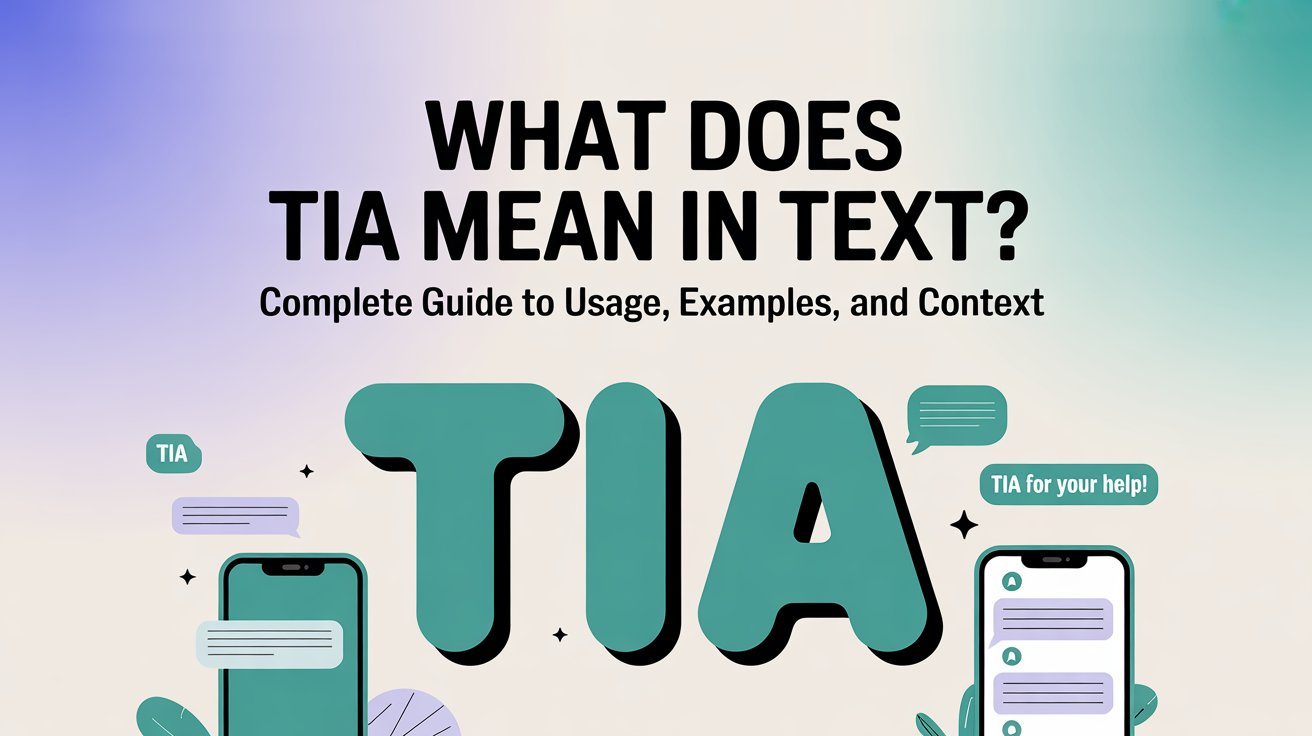
What Does TIA Mean in Text is a question many people ask when they come across this abbreviation in a message, email, or social media post. At first glance, it can look confusing, especially if you’re new to texting slang. TIA is widely used across online chats, social media platforms, texting apps, and even emails, and it carries a polite and casual meaning that is easy to understand once you know the context.
In this guide, we’ll break down the meaning of TIA, explore its use across different platforms, provide real-life examples, compare it to other texting acronyms, and discuss proper etiquette. By the end of this article, you’ll know exactly how to use TIA confidently and naturally.
Core Definition – What TIA Stands For in Text Communication
TIA stands for “Thanks in Advance.” It is a polite abbreviation used when requesting help, information, or a favor from someone. Instead of writing out the full phrase, people shorten it to TIA to save time and fit modern texting and social media trends.
The main purpose of TIA is to show gratitude before a favor is completed, which makes your message sound courteous and friendly. For example, instead of saying, “Could you send me the report? Thanks in advance,” you can simply write, “Could you send me the report? TIA.”
Why People Use TIA in Texts
People use TIA because it communicates politeness, efficiency, and clarity. It is especially popular among users of texting apps, social media, and online forums. Using TIA makes your message appear considerate and helps set the right tone when making a request.
However, TIA can sometimes be perceived as slightly expectant, since it implies that the sender assumes help will be provided. Context matters, and using TIA with friends, colleagues, or online communities usually works well, while in highly formal settings it’s best to spell out the full phrase.
Popular Contexts Where TIA Is Used
In Text Messaging
TIA is most commonly used in everyday text messages to friends, family, or colleagues. It is placed at the end of requests and helps maintain a friendly tone. For instance, you might text, “Can you send the photos from the party? TIA.”
On Social Media and Forums
TIA is widely used in comments, discussion threads, or posts asking for advice. For example, someone might post, “Any recommendations for a good laptop? TIA,” which signals gratitude in advance for any responses.
In Emails (Casual vs. Professional)
In casual emails, TIA can be used to pre-thank recipients. In professional or formal emails, it’s recommended to spell out “Thanks in Advance” to maintain professionalism.
Examples of TIA in Real Conversations
Using examples helps understand how TIA is naturally integrated into texting and online communication. Here are some realistic instances:
- “Could you share the meeting notes? TIA!”
- “Looking for travel tips for Paris, TIA in advance.”
- “Can anyone recommend a good book? TIA!”
- “Please send me the updated files. TIA.”
These examples show that TIA is flexible, polite, and widely recognized in modern texting culture.
Other Slang Meanings of TIA
While Thanks in Advance is the primary meaning, TIA can have alternative uses in specific contexts:
That Is All
Used to finalize a statement or message, signaling the sender is done writing.
Take It Away
Commonly seen in collaborative discussions, online threads, or video comments to invite someone to speak or contribute.
This Is Awkward
Used humorously in online chat when a situation is uncomfortable.
Medical or Technical Contexts
TIA can also stand for Transient Ischemic Attack, a mini-stroke, in medical conversations. This is not relevant in text slang but can appear in other discussions.
Linguistic Differences – TIA in Other Languages
In Spanish, tía means “aunt,” which is completely unrelated to the texting abbreviation. Understanding context is key because the same combination of letters can have different meanings across languages. For online or texting use, TIA almost always refers to “Thanks in Advance.”
Etiquette – When to Use TIA (and When Not to)
Using TIA correctly is important for maintaining politeness and clarity. Best practices include:
- Use TIA in casual texts, social media comments, and friendly emails.
- Avoid using TIA in highly formal or professional emails unless accompanied by the full phrase.
- Place TIA at the end of your request for better readability.
How TIA Affects Communication Tone
TIA not only shows gratitude but also subtly influences the tone of your message. It can convey:
- Courtesy – Pre-thanking makes your message appear polite.
- Expectation – Some recipients may perceive it as assuming help will be provided.
- Casual friendliness – Ideal for social media, forums, and texting.
Related Acronyms Commonly Used with TIA
Here is a small table showing TIA alongside similar acronyms used in texting and online communication:
| Acronym | Meaning | Common Use |
|---|---|---|
| TIA | Thanks in Advance | Texts, social media posts, emails |
| TY | Thank You | Expressing gratitude after an action |
| YW | You’re Welcome | Response to thanks |
| BRB | Be Right Back | Temporary absence in chat |
| TTYL | Talk To You Later | Closing a conversation |
TIA vs Similar Online Abbreviations
Comparing TIA to related abbreviations helps clarify its unique meaning:
- TIA vs TY – TY is used after a favor is completed, while TIA is used before.
- TIA vs TTYL – TTYL signals the end of a conversation, unrelated to requesting help.
- TIA vs TBA – TBA stands for “To Be Announced,” unrelated to TIA.
Frequently Asked Questions (FAQ)
Is TIA rude or impolite?
TIA is not rude. It is generally polite, though context and audience matter. Some people may perceive it as slightly presumptive.
Can TIA be used in business texts?
Yes, but in professional settings, it’s better to spell out Thanks in Advance to avoid misunderstanding.
Does TIA always mean Thanks In Advance?
In texting and social media, yes. Alternate meanings exist in other contexts but are rarely used in casual conversation.
Can you use TIA in formal emails?
Yes, but for clarity, spell it out. TIA works best in informal or casual messages.
Conclusion – Understanding TIA in Text Messaging
TIA is a simple yet powerful abbreviation that communicates gratitude in advance, shows politeness, and is widely recognized across texting, social media, and casual email platforms. By understanding its meaning, proper usage, tone, and related acronyms, you can confidently use TIA in everyday online communication.
Remember, context matters. Always consider your audience and platform to ensure TIA is interpreted the way you intend.